I'm not surprised that Marco Van Basten has stepped down as coach of Az Alkmaar because of "mental and physical problems".
I'm just amazed at how many people seem eager to become a coach, a job that makes most other jobs look stress-free.
You may have difficult days at work from time to time but you don't have the hot breath of 50,000 people blaming you when one of the over-bred multi-millionaires you send out to implement your policies have a bit of an off-day.
When absolutely everything that could go wrong has gone wrong you don't have to go and face a room-full of hacks who seem completely at a loss as to how to fix their own business but can immediately tell you where you're going wrong in yours.
You don't turn on the radio to hear a load of hacks gleefully discussing how soon you'll be fired.
I don't think anybody puts themselves through that kind of thing for the money.
"World-class thinking about music, business, publishing and the general world of media" - Campaign
chaplin
Tuesday, September 16, 2014
Monday, September 15, 2014
Putting Nick Cave on the cover of the NME is like putting Johnnie Ray on the cover in 1976
"Yesterday's Papers", my programme on Radio 4 this afternoon at four, doesn't have time to go into the minutiae of the decline of print music magazines but you can see one problem at work in the latest issue of NME.
Nick Cave had his major success at the end of the 80s, which is a quarter of a century ago. Putting him on the cover is like putting Johnnie Ray on the cover in 1976.
Of course that analogy doesn't apply because the world moves so much more slowly now and anyway Nick Cave has the kind of fans who may even buy the paper because he's there. The free posters are interesting too. Bet the Iggy Pop and David Bowie pictures date from before the current editorial team were born.
There was a time when the best thing you could put on the cover of the NME was the new, new thing. That formula stopped working years ago. And please don't waste your time blaming the publishers or the editorial staff for not being bold or adventurous enough. They found out where boldness and adventurousness gets them because they tried it and looked at the figures.
Old publishing saying: pioneers are dead men with arrows in their back.
Nick Cave had his major success at the end of the 80s, which is a quarter of a century ago. Putting him on the cover is like putting Johnnie Ray on the cover in 1976.
Of course that analogy doesn't apply because the world moves so much more slowly now and anyway Nick Cave has the kind of fans who may even buy the paper because he's there. The free posters are interesting too. Bet the Iggy Pop and David Bowie pictures date from before the current editorial team were born.
There was a time when the best thing you could put on the cover of the NME was the new, new thing. That formula stopped working years ago. And please don't waste your time blaming the publishers or the editorial staff for not being bold or adventurous enough. They found out where boldness and adventurousness gets them because they tried it and looked at the figures.
Old publishing saying: pioneers are dead men with arrows in their back.
Sunday, September 14, 2014
In 1971 nobody kept a record of the records
I get a lot of enjoyment out of my 1971 playlist. It's a bit like having a garden. From time to time I visit and do a bit of weeding. I chuck out duplicates. I get new things from the garden centre. For instance, when I started it Spotify didn't have Led Zeppelin. Now they do.
There's the odd album which is probably so locked up in legals that it may never appear. You can't get Badfinger's 1971 album "Straight Up" so I had to get a track from it via a film soundtrack. Sometimes Spotify has things mixed up. They've confused Paul Williams, the composer of the soundtrack of "Bugsy Malone", with an Evangelical Christian singer and anyway his 1971 album "Just An Old Fashioned Love Song" isn't represented.
Sometimes I'm quite relieved to see albums aren't there. Donovan's stuff can be infantile at the best of times and I can get by without hearing his 1971 children's album "HMS Donovan" again. Other times it's a shame. You can't get the first J. Geils Band album, which came out in the UK in 1971, but you can get the follow-up "The Morning After", which came out the same year.
Lots of acts put out two albums in 1971 and most of them were also on tour for most of the year: Alice Cooper, Yes, Carole King, Paul McCartney (one on his own and one with Wings) and The Faces (you can't get "A Nod..." on Spotify for some reason).
In 1971 nobody seemed to have worried about "saturating the market". Crosby, Stills and Nash each put out solo albums in the year and the group was further represented by the live album "4 Way Street". At the same time Neil Young was touring with the songs that would come out on "Harvest" the following year.
Some albums, such as Nick Drake's "Bryter Later", which is marked as a 1970 release, don't appear to have actually come out until March 1971.
I was talking to a youngster the other day (they come up and ask questions when I'm mending my nets at the harbour) and trying to explain that in those days release dates were approximate, particularly where the smaller labels and the less well-known artists were concerned. In the 70s if you went into a record shop and asked them to look something up they would have to either consult a Gramophone guide, which would always be a year out of date, or their own card index. If you knew what record company it was they might order it and if they were lucky they might receive it. If not they would keep on putting in the order and getting "not available" in reply. It might take months to find out they were trying the wrong distributor.
In those days shopping was like a treasure hunt. Affording the records was one thing. Hunting them down was another thing altogether.
Thursday, September 11, 2014
Breakfast with a National Treasure at the British Museum
I guarantee my day started better than yours did. First thing this morning I was at the British Museum for a press unveiling of Germany: Memories Of A Nation, Radio Four's big new series which starts at the end of the month.
Neil MacGregor, the director of the British Museum who fronted A History Of The World In 100 Objects and Shakespeare's Restless World, stood up and gave us half an hour on the relationship between German identity and German history.
I noted down a few nuggets: the greatest German philosopher, Imanuel Kant, never set foot in any of the country we now call Germany; Goethe was a great admirer of british railways; the greatest German military decoration, the Iron Cross, is given to all ranks; the resettlement of eastern Germans to the western sector in 1946 was equivalent to the entire population of Australia and Canada coming back to the UK; the true measure of tyrannies like Hitler's is the amount of energy they're prepared to spend on trivial things; being an island people, the British have difficulty understanding peoples who define themselves across national frontiers.
He spoke without notes, using just a few slides to illustrate exhibits in the British Museum event which will accompany the series. He didn't once say "um" or "er", when he reached for a word it was always the right one, he didn't include a sentence that didn't need to be there in order to set up the next sentence and when he finished the audience, who were made up of hacks and arts professionals, applauded him for longer than I've ever heard anyone applauded at a press conference before.
Like all the best speakers, MacGregor's a teacher above all. It's a rare gift.
Monday, September 08, 2014
Get your tickets for a quiet Word with Ben Watt at the Islington
Ben Watt's our special guest when we record another Word podcast at the Islington on Monday, September 22nd.
He'll be talking to me and Mark Ellen about his adventures in the music business as a solo artist, producer, DJ, club owner and independent label head.
He'll also be talking about his current album Hendra and his book Romany and Tom: A Memoir, which I blogged about here. The first has just picked up the Difficult Second Album award from AIM, the second has been nominated for the Samuel Johnson Prize, Britain's most prestigious prize for non-fiction.
This is the latest in a series of shows that we've put on at the Islington. The last one featured Simon Napier-Bell. They're available as podcasts, which you can subscribe to here. Tickets to the live event are £10. You can get them here.
He'll be talking to me and Mark Ellen about his adventures in the music business as a solo artist, producer, DJ, club owner and independent label head.
He'll also be talking about his current album Hendra and his book Romany and Tom: A Memoir, which I blogged about here. The first has just picked up the Difficult Second Album award from AIM, the second has been nominated for the Samuel Johnson Prize, Britain's most prestigious prize for non-fiction.
This is the latest in a series of shows that we've put on at the Islington. The last one featured Simon Napier-Bell. They're available as podcasts, which you can subscribe to here. Tickets to the live event are £10. You can get them here.
Wednesday, September 03, 2014
There's something fishy in the world of the rock doc
Music documentaries are like Agatha Christie mysteries. Once you've finished one you just want to pop the next one right in. Nowadays the interesting ones are all made by freelances and they get made because the person behind the camera spins the distributor a line. The distributor, who knows no better, then tries to spin the same line to the public.
The most commercially successful example of this is Searching For Sugar Man, which I'm staggered to see won an Oscar. I turned it off after half an hour. The people behind the camera seemed to be asking me to believe that this man Rodriguez had made his records in 1970-71 and then vanished so utterly that he didn't know that his music was helping bring down apartheid in South Africa and the most hard core of his fans didn't know the first thing about him. If you don't buy that, and I don't, then you don't buy the film, which proposes the usual bogus screen "journey" to find him.
Paul Williams: Still Alive is about the man who wrote the music for "Bugsy Malone" and hits for the Carpenters and Barbra Streisand. Here the director spends the first ten minutes trying to get us to believe that he began the project under the impression that Williams was dead. Even before the internet he would have to have been singularly stupid to think this was the case. Then he makes contact with Williams and follows him on the road as he continues to play his hits, albeit under slightly reduced circumstances, and to counsel fellow addicts. I liked Williams, not least because he had the honesty to say that there were things in his personal life that he was so ashamed of that he wasn't prepared to talk about them on camera. What I don't understand, and what this film doesn't lift a finger to explain, is how come a man who's written some of the most played songs in radio history isn't comfortably off.
"The Ballad Of Rambling Jack" is made by Rambling Jack Elliott's daughter, allegedly in an effort to get to know him, and also to have him account for his shortcomings as a father. The journey here isn't quite as bogus. She tries without success to corner him. There's an odd coldness about Jack, as if he's only alive when he's on stage, with obvious implications for the people who have to deal with him in real life. Dave Van Ronk, who's died since the film was made, says that Jack should have settled down and been a family man but then we wouldn't have had Rambling Jack Elliott. This is fine for us, as he points out, but possibly not so good for his daughter.
The most commercially successful example of this is Searching For Sugar Man, which I'm staggered to see won an Oscar. I turned it off after half an hour. The people behind the camera seemed to be asking me to believe that this man Rodriguez had made his records in 1970-71 and then vanished so utterly that he didn't know that his music was helping bring down apartheid in South Africa and the most hard core of his fans didn't know the first thing about him. If you don't buy that, and I don't, then you don't buy the film, which proposes the usual bogus screen "journey" to find him.
Paul Williams: Still Alive is about the man who wrote the music for "Bugsy Malone" and hits for the Carpenters and Barbra Streisand. Here the director spends the first ten minutes trying to get us to believe that he began the project under the impression that Williams was dead. Even before the internet he would have to have been singularly stupid to think this was the case. Then he makes contact with Williams and follows him on the road as he continues to play his hits, albeit under slightly reduced circumstances, and to counsel fellow addicts. I liked Williams, not least because he had the honesty to say that there were things in his personal life that he was so ashamed of that he wasn't prepared to talk about them on camera. What I don't understand, and what this film doesn't lift a finger to explain, is how come a man who's written some of the most played songs in radio history isn't comfortably off.
"The Ballad Of Rambling Jack" is made by Rambling Jack Elliott's daughter, allegedly in an effort to get to know him, and also to have him account for his shortcomings as a father. The journey here isn't quite as bogus. She tries without success to corner him. There's an odd coldness about Jack, as if he's only alive when he's on stage, with obvious implications for the people who have to deal with him in real life. Dave Van Ronk, who's died since the film was made, says that Jack should have settled down and been a family man but then we wouldn't have had Rambling Jack Elliott. This is fine for us, as he points out, but possibly not so good for his daughter.
The secret of successful public speaking revealed
Conversation at Sunday lunch drifted to public speaking - the fear thereof. As Seinfeld says, at most funerals people would rather be in the casket than delivering the eulogy. I say, anybody can do it. Kids say, you would say that.
What I should have said next has only just occurred to me.
You're mistaken if you believe that people who are good at public speaking worry about it less than people who are frightened of it.
They worry about it more.
They deal with that worry by spending a lot of time preparing. That's probably why they're good at it.
Thought I'd better write that down.
What I should have said next has only just occurred to me.
You're mistaken if you believe that people who are good at public speaking worry about it less than people who are frightened of it.
They worry about it more.
They deal with that worry by spending a lot of time preparing. That's probably why they're good at it.
Thought I'd better write that down.
Monday, September 01, 2014
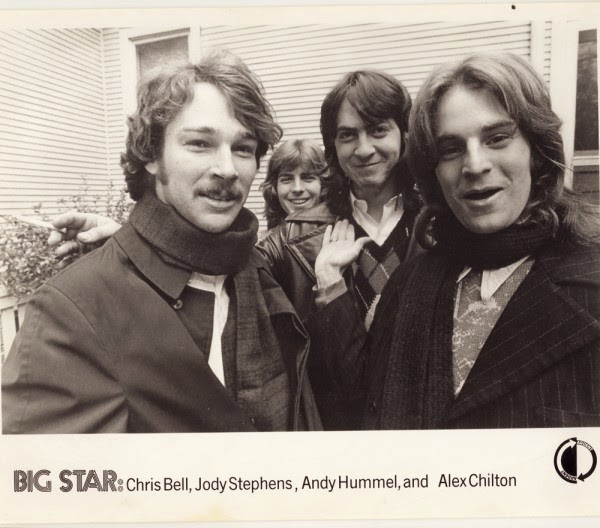
Who had it toughest? Big Star or Jane Austen?
I've been flipping The Real Jane Austen by Paula Byrne.
I learned that she only saw her name in print twice in her life. On both occasions she was listed as a paid subscriber to a new book. Crowd funding clearly didn't begin with Kickstarter.
When her beloved sister Cassandra went away to marry she thought she would never see her again. Marriage meant childbirth and that often meant death. As it happened the potential husband died before they could be married and so Cassandra came back. Her life, which ended when she was forty-one, was punctuated by sudden deaths of people close to her.
She used to go into her father's church and fill out phoney banns announcing her upcoming wedding to fictitious men. When her father died she didn't go to the funeral because widows and daughters didn't in those days.
When she was twenty-seven a man six years younger proposed to her. She accepted and then changed her mind the following morning.
She had a wealthy relation who was tried for shoplifting a card of lace. If she'd been found guilty the penalty was either death or transportation.
After her death her books were out of print for twelve years, which is longer than the albums of Big Star.
I learned that she only saw her name in print twice in her life. On both occasions she was listed as a paid subscriber to a new book. Crowd funding clearly didn't begin with Kickstarter.
When her beloved sister Cassandra went away to marry she thought she would never see her again. Marriage meant childbirth and that often meant death. As it happened the potential husband died before they could be married and so Cassandra came back. Her life, which ended when she was forty-one, was punctuated by sudden deaths of people close to her.
She used to go into her father's church and fill out phoney banns announcing her upcoming wedding to fictitious men. When her father died she didn't go to the funeral because widows and daughters didn't in those days.
When she was twenty-seven a man six years younger proposed to her. She accepted and then changed her mind the following morning.
She had a wealthy relation who was tried for shoplifting a card of lace. If she'd been found guilty the penalty was either death or transportation.
After her death her books were out of print for twelve years, which is longer than the albums of Big Star.
Big Star: there's no success like failure
Best bit in the Big Star documentary "Nothing Can Hurt Me" recalls their appearance at the one and only Rock Writers Convention in Memphis in 1973. "Suddenly they found their audience," somebody says. How true that is.
Groups who appeal to rock critics don't appeal to anyone else. This is made more certain by the fact that rock critics prefer bands who aren't popular. Nothing appeals to the rock critic mindset more than a band somehow too pure to appeal to the great unsophisticated. And they like bands who appear temperamentally unsuited to fame. Because a lot of rock critics are train wrecks themselves they feel validated by bands who are the same.
Big Star were celebrated among a bunch of people who thought that they could make a load of other people like them and then found out they couldn't. Of course they suffered from having the wrong record company and the wrong distribution but it might not have made much difference if they hadn't. Big Star were the progenitor of a seam of hundreds of bands who sound as if they ought to produce pop hits but don't actually have the common touch that you need to produce hits. They were never going to make it but there was enough pop DNA in their sound to make it seem they might.
Instead they had a very successful career as a failure. Their reputation grew over the years. "They were like a letter posted in 1971 that didn't arrive until 1994," says Robyn Hitchcock. Actually, it's arrived at regular intervals since 1978.
The film starts with the original, purposely slipshod band in the studio in 1971 and ends with the great and the good of contemporary rock gathering around a microphone and a string section to respectfully pay tribute to the music they came up with. Watching that it struck me: is this the way Classical Music got started?
Groups who appeal to rock critics don't appeal to anyone else. This is made more certain by the fact that rock critics prefer bands who aren't popular. Nothing appeals to the rock critic mindset more than a band somehow too pure to appeal to the great unsophisticated. And they like bands who appear temperamentally unsuited to fame. Because a lot of rock critics are train wrecks themselves they feel validated by bands who are the same.
Big Star were celebrated among a bunch of people who thought that they could make a load of other people like them and then found out they couldn't. Of course they suffered from having the wrong record company and the wrong distribution but it might not have made much difference if they hadn't. Big Star were the progenitor of a seam of hundreds of bands who sound as if they ought to produce pop hits but don't actually have the common touch that you need to produce hits. They were never going to make it but there was enough pop DNA in their sound to make it seem they might.
Instead they had a very successful career as a failure. Their reputation grew over the years. "They were like a letter posted in 1971 that didn't arrive until 1994," says Robyn Hitchcock. Actually, it's arrived at regular intervals since 1978.
The film starts with the original, purposely slipshod band in the studio in 1971 and ends with the great and the good of contemporary rock gathering around a microphone and a string section to respectfully pay tribute to the music they came up with. Watching that it struck me: is this the way Classical Music got started?
Thursday, August 28, 2014
Why acts don't make it - the brutal truth
I was listening to an interesting programme about Judee Sill which is coming up in a couple of weeks on Radio 4. Sill made a couple of very good albums for Asylum in the early 70s. She had a song called "Jesus Was A Crossmaker" that was almost celebrated at the time. Celebrated, at least, among the people who might have watched "Old Grey Whistle Test" or read the "Melody Maker". Obviously not mass but better known than most things.Sill died in 1979. There had been a lot of sadness in her life: drugs, accidents, abuse. When that happens there's always the chance that thirty-five years later Radio 4 will commission a programme about you called The Lost Genius Of Judee Sill.
But here's the thing. When acts make it big they take is as proof of their talent. They did it on their own.
When they don't make it big they always blame it on something or someone specific. The record company went out of business, the radio banned us, the drummer left, there was a strike, there was an oil crisis or a war, there was somebody who had it in for us.
If the artists don't make such a claim then enthusiasts have to make it for them. The story here is that Sill outed David Geffen, the boss of her record company, on-stage. In this narrative he had his revenge by dropping her from the label. I'm not sure the record business works like that. It's more likely that his company had put out the two albums they were obliged to release under the terms of Sill's contract, records which hadn't sold. Therefore they decided their money would be better spent on somebody else.
Simon Napier-Bell was talking the other night about how performers have a combination of self-belief and chronic insecurity which you would consider mad if you encountered it in a member of the public. This same egoism drives them to believe that the only thing standing between them and widespread acclaim is some kind of wicked plot. They would rather believe that somebody has been deliberately trying to do them down than to accept the truth, which is that we, the public, weren't really bothered one way or the other. We're the villains, not the mythical "suits" or the tin ears at radio. Our natural state is indifference. We bought some other music or we didn't buy any music at all. We forgot. We passed by on the other side. We have lives in which your career doesn't figure at all.
When we don't buy your record it's nothing to do with you. As the ex-girlfriend would say, it's not you; it's us. But whereas she would be saying it to spare your feelings we would say it because it's the brutal truth.
But performers, whose job is the winning of hearts, find this impossible to face.
Makes me think of the episode of Frasier called "The Focus Group" in which the star is so obsessed by the one listener who says that he doesn't like him that he follows him home to try to get an explanation. With disastrous results.
Monday, August 25, 2014
An evening in the pub with Simon Napier-Bell
Simon Napier-Bell is uniquely qualified to write about the history of the music business because he's one of the few authors who's also read a record contract. As the manager of the Yardbirds in the sixties, Japan in the seventies and Wham! in the eighties he's seen what has changed about the music business and what hasn't. A lot of this wisdom is gathered in his new book Ta-ra-ra-boom-de-ay, which is sub-titled "the dodgy business of popular music". It's the kind of tour d'horizon that needed writing, spanning events from the establishment of copyright in the days of powdered wigs to The X-Factor where the audience pick up the bill for payola. It's full of words to the wise. I was particularly struck by his point that since nine out of ten acts signed by record companies don't make it then a record contract is as good as a guarantee of failure.
Mark Ellen and I talked to him in a special Word Podcast Live at The Islington last week. We covered everything from the early stars of music hall through the era of the show tunes and the early days of rock and roll to the present day. A recording is available for free as a Word Podcast. You can subscribe or listen here. And here's the same thing on YouTube.
If you're looking for further talkie entertainment, I'll be appearing with Mark Ellen at the Soho Literary Festival on September 24th (tickets here and at the Henley Festival on October 1st (details). Come along, why don't you?
Mark Ellen and I talked to him in a special Word Podcast Live at The Islington last week. We covered everything from the early stars of music hall through the era of the show tunes and the early days of rock and roll to the present day. A recording is available for free as a Word Podcast. You can subscribe or listen here. And here's the same thing on YouTube.
If you're looking for further talkie entertainment, I'll be appearing with Mark Ellen at the Soho Literary Festival on September 24th (tickets here and at the Henley Festival on October 1st (details). Come along, why don't you?
Sunday, August 24, 2014
Malcolm Gladwell was one man Kirsty Young couldn't seduce
We listened to a handful of old and new editions of Desert Island Discs while driving north for a wedding. Kirsty Young's very good at it. Less gushing than Sue Lawley. Not the anecdote hunter like Parkinson. But even her powers of persuasion couldn't get Malcolm Gladwell to tell her anything about his private life. He declined every opportunity to go there, simply because he couldn't understand why people from this part of the world are so interested in everybody's private lives. He wasn't tense or precious about it. He just wouldn't play. Get him on to any subject but himself and he was great. The problem is that DID traditionally operates on the premise that the subject we all find most fascinating is ourself.
Wednesday, August 20, 2014
When it comes to The Band it's sad stories wherever you look
Saw the Levon Helm documentary Ain't In This For My Health, which was slight but not without interest.
I was particularly interested in Elizabeth Danko, widow of Rick, who's the most forthright interviewee in the film. We see pictures of a sleek rock star wife on board a private jet during the Bob Dylan/Band tour in 1974. Then we see her as an elderly woman living in a not very posh retirement home in Woodstock. Rick had died and there can't have been much income even when he was around. The PRS from the use of This Wheel's On Fire on Absolutely Fabulous wouldn't pay many doctor's bills, particularly if you took as little care of yourself as Rick did.
I went looking for more information about her and found that she died since the film came out. Elizabeth was Danko's second wife. Then I read he had a son Eli from his first marriage. Eli died at the age of 18 in a binge drinking incident at college. The local coroner called the Danko house three times, wishing to speak to the boy's father or mother and tell them about his findings. Nobody got back to him.
Funny how Robbie Robertson talked in The Last Waltz about the road being "a godamn impossible way of life". That was 1976. In truth The Band hadn't toured anything like as much as, say, Jethro Tull, so it's difficult to know quite what he was talking about. It was a good line. For most of them it seems life got a whole lot more impossible once the touring stopped.
Saturday, August 16, 2014
Tramps like us, baby, we were born to jump
Jessica Springsteen, daughter of Bruce Springsteen and Patti Scialfa, has been in London this week, competing in the Longines Global Champions show jumping tour.
Other competitors included Sofia Abramovic, daughter of Roman, and Athina Onassis de Miranda, only surviving descendant of Aristotle Onassis.
I'm sure Jessica's very good. Her ambition is to represent the USA at the next Olympics. Best of luck to her.
There's a line in Springsteen's song "The Wish" about "the things that guitar bought us". It always makes you think about cars or jewels. What it should really make you think of is unprecedented social mobility.
Other competitors included Sofia Abramovic, daughter of Roman, and Athina Onassis de Miranda, only surviving descendant of Aristotle Onassis.
I'm sure Jessica's very good. Her ambition is to represent the USA at the next Olympics. Best of luck to her.
There's a line in Springsteen's song "The Wish" about "the things that guitar bought us". It always makes you think about cars or jewels. What it should really make you think of is unprecedented social mobility.
Tuesday, August 12, 2014
The words "Oscar winner" tell us nothing
This headline from today's New York Times site seems to be the right way to memorialise somebody.
What they were, what they did and then what they won. In that order.
All too often nowadays, in its unseemly haste to have something to say before it's worked out what's worth saying, 24 hour rolling news leads its deaths stories with "Oscar winner" or "Grammy winner" as if that was the thing that made the person notable rather than the (usually belated) recognition of their being of note.
What they were, what they did and then what they won. In that order.
All too often nowadays, in its unseemly haste to have something to say before it's worked out what's worth saying, 24 hour rolling news leads its deaths stories with "Oscar winner" or "Grammy winner" as if that was the thing that made the person notable rather than the (usually belated) recognition of their being of note.
Wednesday, August 06, 2014
Why I'll never know if The Goldfinch has a good ending
I once walked out of a screening of Pearl Harbour ten minutes before the end. Considering at that point I'd put up with its shortcomings for over three hours you might have thought I would have stayed for that last bit of action. I didn't because it's long- windedness had made me so cross I wanted to strike back in the only way available to me. You may have had my money but I'm damned if you're going to waste another ten minutes of my life.
I've just bailed out of Donna Tartt's The Goldfinch around page 700, which is a hundred pages from the end. I'd been reading it on holiday this week and for most of that time I enjoyed it: good premise, a few excellent characters and lots of educational material about the world of fake antiques. But I fell out with it for the same three reasons I fall out with so many books.
1. The hero goes through a major drugs phase. I'm sure drugs can be enormous fun to take but they're always tedious to read about.
2. It gets violent near the end. Violence has its place in fiction. I think it should be dealt with in a paragraph. If you're expecting me to keep track of who's got the deadliest weapon and which room in the house they're lurking in and expecting me to remember the name of more than one wrong un then frankly you're talking to the wrong reader.
3. In straining for a finish that justifies what's gone before, the book tired me out. It spends the last three hundred pages pumping itself up for a big finish. During that time I lost the thread, lost interest in finding out how it ended and eventually, somewhere under the Channel on Le Shuttle, gave up.
I learned a lot about the endings of stories when we were doing True Stories Told Live. Since having an ending is the thing which distinguishes fiction from real life, it's the bit that the storyteller agonises most about, often to the detriment of the story.
What storytellers fail to realise is that even if we're enjoying things we can't wait for them to end. Films, concerts, parties, novels, it's all the same.
I think it was Oscar Hammerstein who said, give them a good opening number and they'll forgive you anything.
I think it was me who said the best ending is always the one that comes along soonest.
I've just bailed out of Donna Tartt's The Goldfinch around page 700, which is a hundred pages from the end. I'd been reading it on holiday this week and for most of that time I enjoyed it: good premise, a few excellent characters and lots of educational material about the world of fake antiques. But I fell out with it for the same three reasons I fall out with so many books.
1. The hero goes through a major drugs phase. I'm sure drugs can be enormous fun to take but they're always tedious to read about.
2. It gets violent near the end. Violence has its place in fiction. I think it should be dealt with in a paragraph. If you're expecting me to keep track of who's got the deadliest weapon and which room in the house they're lurking in and expecting me to remember the name of more than one wrong un then frankly you're talking to the wrong reader.
3. In straining for a finish that justifies what's gone before, the book tired me out. It spends the last three hundred pages pumping itself up for a big finish. During that time I lost the thread, lost interest in finding out how it ended and eventually, somewhere under the Channel on Le Shuttle, gave up.
I learned a lot about the endings of stories when we were doing True Stories Told Live. Since having an ending is the thing which distinguishes fiction from real life, it's the bit that the storyteller agonises most about, often to the detriment of the story.
What storytellers fail to realise is that even if we're enjoying things we can't wait for them to end. Films, concerts, parties, novels, it's all the same.
I think it was Oscar Hammerstein who said, give them a good opening number and they'll forgive you anything.
I think it was me who said the best ending is always the one that comes along soonest.
Wednesday, July 23, 2014
What my grandparents wore to the beach
I guess this was taken on the beach at Filey in the late 1950s. Left to right: my maternal grandfather Leonard, me, my grandmother Lois (pronounced Loyce.)
That's how my grandparents dressed to go to the seaside. If they were going to be seen in public there was no question of not putting on their best. Leonard wore a shirt (possibly with a stiff collar), tie, stout sweater, equally substantial trousering, golfing socks, highly-polished shoes and his best cap. Lois appears to be wearing pearls and is certainly guarding her best handbag.
I never saw my grandad out in public in a shirt without a tie. The very notion of him owning a pair of shorts would have seemed disrespectful. You could say the same about granny and trousers.
Granny and grandad weren't in any way posh but they were profoundly respectable. The clothes they wore were the outward expression of that respectability. Particularly on the beach.
That's how my grandparents dressed to go to the seaside. If they were going to be seen in public there was no question of not putting on their best. Leonard wore a shirt (possibly with a stiff collar), tie, stout sweater, equally substantial trousering, golfing socks, highly-polished shoes and his best cap. Lois appears to be wearing pearls and is certainly guarding her best handbag.
I never saw my grandad out in public in a shirt without a tie. The very notion of him owning a pair of shorts would have seemed disrespectful. You could say the same about granny and trousers.
Granny and grandad weren't in any way posh but they were profoundly respectable. The clothes they wore were the outward expression of that respectability. Particularly on the beach.
Tuesday, July 22, 2014
When Ralph Coates was traded across the Harry Fenton Line
It's the time of year football clubs shuffle their playing staffs, moving young stars on to bigger clubs, despatching yesterday's stars to Hull.
These days they'll tend to arrive all looking the same, stepping out of blacked-out SUVs in skinny jeans and expensively distressed tee shirts, accompanied by disreputable-looking agents, everyone nervously fondling their mobiles.
If they sign they will swiftly move into the local millionaires' enclave. Once installed behind the security gates with their wife, family and dependent relatives, they need only to establish the route to the training ground, golf club and beauty parlour to be able to pick up life precisely as it was at their previous club a few hundred miles away.
It's an interesting time to be re-reading The Glory Game, Hunter Davies's definitive inside story of the 1971-72 season at Tottenham Hotspur. It begins with the arrival of Ralph Coates from Burnley for £190,000, at that time a cash record for a British player. When Ralph was first told of the deal he said "no player's worth that", which gives you some idea of his modesty.
He and his wife don't have a house and so the club put them in a first floor flat on Green Lanes in Palmers Green. There's no phone or TV. I've lived near Green Lanes for the last forty years and there's never been a time when you could have imagined it as a suitable place to put a top footballer. Even though it was widely accepted back then that top footballers were wealthy men, earning in some cases more than £200 a week, the Coateses worry about being able to afford the £15,000 needed to buy a house in the South.
When they get changed for their first pre-season training session, the rest of the squad, who were predominantly Southerners, stare at Coates's pointed shoes and narrow trousers, still the mark of the Northerner who hadn't gone South. They congratulate him on his shirt. He says thanks, not realising they're joking.
1971 was the year the flared trouser began to arrive on every High Street via chains like Take Six and Harry Fenton. After that we were all just as in fashion or out of fashion as each other. Maybe Ralph was the last man to move from the old world to the new.
These days they'll tend to arrive all looking the same, stepping out of blacked-out SUVs in skinny jeans and expensively distressed tee shirts, accompanied by disreputable-looking agents, everyone nervously fondling their mobiles.
If they sign they will swiftly move into the local millionaires' enclave. Once installed behind the security gates with their wife, family and dependent relatives, they need only to establish the route to the training ground, golf club and beauty parlour to be able to pick up life precisely as it was at their previous club a few hundred miles away.
It's an interesting time to be re-reading The Glory Game, Hunter Davies's definitive inside story of the 1971-72 season at Tottenham Hotspur. It begins with the arrival of Ralph Coates from Burnley for £190,000, at that time a cash record for a British player. When Ralph was first told of the deal he said "no player's worth that", which gives you some idea of his modesty.
He and his wife don't have a house and so the club put them in a first floor flat on Green Lanes in Palmers Green. There's no phone or TV. I've lived near Green Lanes for the last forty years and there's never been a time when you could have imagined it as a suitable place to put a top footballer. Even though it was widely accepted back then that top footballers were wealthy men, earning in some cases more than £200 a week, the Coateses worry about being able to afford the £15,000 needed to buy a house in the South.
When they get changed for their first pre-season training session, the rest of the squad, who were predominantly Southerners, stare at Coates's pointed shoes and narrow trousers, still the mark of the Northerner who hadn't gone South. They congratulate him on his shirt. He says thanks, not realising they're joking.
1971 was the year the flared trouser began to arrive on every High Street via chains like Take Six and Harry Fenton. After that we were all just as in fashion or out of fashion as each other. Maybe Ralph was the last man to move from the old world to the new.
Wednesday, July 09, 2014
Was that the most men-against-boys football match of all time
Imagine you were managing an under-13 football team and their star striker got injured before a big cup tie. They might suggest to you that they wanted to take the shirt of the missing player out and hold it up during the pre-match formalities. It's the kind of idea over-excited small boys have.
You would quietly tell them that you didn't think that was a good idea. You'd be thinking, I want the team concentrating on what they're going to do in the match, not indulging in this gesture of self-pity.
They lost 7-1. The Brazilians were playing a sentimental game in their heads. The Germans were playing an actual game on the pitch. I loved it. Half the fun of football is watching it go wrong for other people. What I liked about it most was the muted German celebrations after each goal. I think we need more of that kind of thing.
You would quietly tell them that you didn't think that was a good idea. You'd be thinking, I want the team concentrating on what they're going to do in the match, not indulging in this gesture of self-pity.
They lost 7-1. The Brazilians were playing a sentimental game in their heads. The Germans were playing an actual game on the pitch. I loved it. Half the fun of football is watching it go wrong for other people. What I liked about it most was the muted German celebrations after each goal. I think we need more of that kind of thing.
Friday, July 04, 2014
Fifty years ago this week I went to see "A Hard Day's Night". Last night I went to see it again
Fifty years ago this week I went to see "A Hard Day's Night" at the Pioneer cinema in Dewsbury. This was situated on the top floor of the Coop and was reachable via a very slow lift behind a metal grille. In those days nobody took any notice of a film's starting time. You might turn up halfway through, watch until the end and then stay to watch it from the beginning. I watched "A Hard Day's Night" three times that day. It was enthralling.
It was enthralling because it showed the Beatles on a screen yay high and brought them up this close. Nothing had done that before. TV still had end of the pier production values and so we had never seen them via a medium that matched their splendour. Cinema tickets, unlike records, were affordable. That's why the release of "A Hard Day's Night" was a moment of greater impact than the release of the two albums they put out before its soundtrack. Everybody shared it.
Last night I went to a screening of a new digital version of the film at the BFI. The director Dick Lester was interviewed by Mark Lewisohn. Lester pointed out that it was only made because the music division of United Artists saw it as a way to get a best-selling soundtrack album, it was shot in black and white because they didn't think Beatlemania would last long enough to justify the investment in colour and the brass at the company thought it was good but assumed the dialogue would be dubbed to make it more intelligible to an American audience. They were told this would not be possible, not least because there simply wasn't time. There's nothing in media and entertainment that can't be ruined by more money and more time. There's no better illustration of that principle than "A Hard Day's Night".
I find its comedy a bit leaden nowadays. There's one joke in the film and it goes like this. Don't grown-ups say some strange things? Whether it's Richard Vernon's "I fought the war for you" routine or Wilfred Brambell's Irish republican pub talk, Victor Spinetti's overwrought luvviespeak or Kenneth Haigh's assumption of the voice of "yoof", the message is this is a middle-aged world in which the young people are only occasionally allowed to feature. The fans in the crowd scenes are all wearing Famous Five clothes - pleated skirts, cardigans, winter coats and clumpy shoes - as if they've been decked out for a school concert. They're children.
However I now realise that the music is even better than I thought it was at the time. I also see that Lester's great achievement was in finding a way to deliver their performances to the screen and happening upon a template which still haunts anyone who tries to point a camera at a pop group. "If I Fell" and "I'm Happy Just To Dance With You" are the original and most powerful pop videos because they depict the Beatles ostensibly rehearsing for their TV appearance. That means they're playing but also working and just enjoying being together. They exchange looks that say, right now we're the luckiest people in the world. It's that feeling that they're playing for their own delight that laid down the way that all bands would seek to behave even to this day. Lester talked about how they had an indivisible solidarity that saw them through. They're the Beatles and you're not. "I hope I managed to communicate how I felt about them," says Lester. He did.
There was such outrageous vitality in their music at the time that it didn't need overselling. The vibrancy of the 1964 sound would never be surpassed. It's amazing that they could do it. In the midst of the madness of Beatlemania they wrote and recorded thirteen absolutely brilliant songs for the film. That's seven to go on the soundtrack and another six you can put on side two. Nobody had ever done that before. Nobody's done it since.
The uncanny perfection of "If I Fell" and "I Should Have Known Better" endures after everything else has gone. It filled that luxurious cinema last night as surely as it warmed the Pioneer in Dewsbury fifty years ago this week. We sat there rapt. When the cowbell came in on the middle eight of the title song I felt the screen was about to burst with joy.
It was enthralling because it showed the Beatles on a screen yay high and brought them up this close. Nothing had done that before. TV still had end of the pier production values and so we had never seen them via a medium that matched their splendour. Cinema tickets, unlike records, were affordable. That's why the release of "A Hard Day's Night" was a moment of greater impact than the release of the two albums they put out before its soundtrack. Everybody shared it.
Last night I went to a screening of a new digital version of the film at the BFI. The director Dick Lester was interviewed by Mark Lewisohn. Lester pointed out that it was only made because the music division of United Artists saw it as a way to get a best-selling soundtrack album, it was shot in black and white because they didn't think Beatlemania would last long enough to justify the investment in colour and the brass at the company thought it was good but assumed the dialogue would be dubbed to make it more intelligible to an American audience. They were told this would not be possible, not least because there simply wasn't time. There's nothing in media and entertainment that can't be ruined by more money and more time. There's no better illustration of that principle than "A Hard Day's Night".
I find its comedy a bit leaden nowadays. There's one joke in the film and it goes like this. Don't grown-ups say some strange things? Whether it's Richard Vernon's "I fought the war for you" routine or Wilfred Brambell's Irish republican pub talk, Victor Spinetti's overwrought luvviespeak or Kenneth Haigh's assumption of the voice of "yoof", the message is this is a middle-aged world in which the young people are only occasionally allowed to feature. The fans in the crowd scenes are all wearing Famous Five clothes - pleated skirts, cardigans, winter coats and clumpy shoes - as if they've been decked out for a school concert. They're children.
However I now realise that the music is even better than I thought it was at the time. I also see that Lester's great achievement was in finding a way to deliver their performances to the screen and happening upon a template which still haunts anyone who tries to point a camera at a pop group. "If I Fell" and "I'm Happy Just To Dance With You" are the original and most powerful pop videos because they depict the Beatles ostensibly rehearsing for their TV appearance. That means they're playing but also working and just enjoying being together. They exchange looks that say, right now we're the luckiest people in the world. It's that feeling that they're playing for their own delight that laid down the way that all bands would seek to behave even to this day. Lester talked about how they had an indivisible solidarity that saw them through. They're the Beatles and you're not. "I hope I managed to communicate how I felt about them," says Lester. He did.
There was such outrageous vitality in their music at the time that it didn't need overselling. The vibrancy of the 1964 sound would never be surpassed. It's amazing that they could do it. In the midst of the madness of Beatlemania they wrote and recorded thirteen absolutely brilliant songs for the film. That's seven to go on the soundtrack and another six you can put on side two. Nobody had ever done that before. Nobody's done it since.
The uncanny perfection of "If I Fell" and "I Should Have Known Better" endures after everything else has gone. It filled that luxurious cinema last night as surely as it warmed the Pioneer in Dewsbury fifty years ago this week. We sat there rapt. When the cowbell came in on the middle eight of the title song I felt the screen was about to burst with joy.
Subscribe to:
Posts (Atom)


.jpg)