We had to close The Word yesterday. We'd told the team the day before. All that remained was to announce it to the readers, advertisers and other interested parties.
Not long ago this would have meant a call to Media Guardian. There would have been some bargaining over exclusivity. A press release would have been sent. There would have been a tense wait to see whether the story was treated sympathetically or shoehorned into a larger narrative. Then you would hope that your readers and interested parties happened to read Media Guardian.
This is what actually happened. Before I went to the office I posted a statement explaining the closure on the Word website. Then I tweeted saying that the magazine was closing in both mine and the magazine's account. This linked to my statement.
By the time I got to work forty minutes later the story was everywhere. The Word site had fallen over twice through weight of traffic. People I hadn't seen for years were in touch. Slower ones were told about it by relatives in China. Media Guardian were on the phone, chasing after the conversation that they once would have started.
People love a funeral and in the digital age they don't even have to dress for it. This funeral was even more attractive because the deceased was there to hear what was said about them. The words of tribute were kindly meant but sometimes over the top. A surprising number of them were laced with anger. Surely somebody must be to blame for this. Somebody suggested getting up a petition, which made me wonder who they would present it to. Others seemed to hint at a wider tragedy about the decline and fall of so-called intelligent debate. Speaking as one who's played that card occasionally when in a tight spot this kind of forehead-smiting, woe-is-us reaction is, to use the adjective of our times, "inappropriate".
Here's what I learned yesterday. The speed with which this item of news spread and became a news event in which people could happily participate and the "disintermediation", to use a jargon word, of the traditional news outlets was a live demonstration of the same forces which mean you can't publish magazines, or indeed anything, the way you once did.
Even the most established and successful ones are having to go about it in a different way. The boss of Hearst Magazines in the United States said recently that all magazines needed to have five revenue streams. They used to have two. It was hard enough to get those.
The organs of the media once sat athwart the roads down which information travelled, charging readers a premium for access to information they couldn't get elsewhere, and advertisers for access to readers they couldn't identify any more precisely.
That doesn't apply anymore. Both readers and advertisers have got hundreds of choices and they use them, which is fine. I don't yearn for the old days. I think the new wide open media world is more interesting and fun than the old one. But I also wouldn't be surprised to see any media enterprise - from massive household name newspaper brands to tiny ones like The Word - shut their doors tomorrow. I wouldn't bat an eyelid.
Saturday, June 30, 2012

Monday, June 25, 2012
We don't talk anymore but TV drama never stops
 In the opening scene of Aaron Sorkin's new drama The Newsroom the hero Jeff Daniels is asked by a college student why America is the greatest country in the world. In the course of launching into an attack on the assumptions implicit in her question and pointing out, in great statistical detail, all the many ways in which America no longer fits the bill, he almost makes her cry.
Obviously it's fiction. I'm starting to wonder if it's also something more. The popular TV writers of today, exemplified by Sorkin in his way and Armando Iannucci in his, always put torrents of words into their characters' mouths. Their dramas are all words. They have so many words to get through that they have to bustle down corridors in flying-V formations as they debate complex moral points. They often stand in open offices directing open abuse to each other. They say what they mean at the top of their voice. They demand that everyone listens to them.
That's not how life is today. In the real 2012 anything that matters is confined to an email or a text. In business meetings people avoid saying what they think, often because they aren't entirely sure what they think and they're terrified at the prospect of getting out of step with the group.
Many of these shows, such as The Good Wife and Mad Men, are set in workplaces, which seem to offer endless scope for drama - the board meeting, the problem in reception, the late night heart to hearts over the bottle of Scotch in the filing cabinet.
In fact places of work have never been quieter or more decorous than they are today. There's very little drinking or fornication going on in today's office. There are less open arguments than there were in the 70s. People steer clear of anything personal because they know that a free and frank exchange of views might land them in a disciplinary procedure. When they use expletives it's usually in an affectionate way.
Maybe the oratorical flights of President Jed Bartlett in The West Wing and the gothic abuse dished out by Malcolm Tucker in The Thick Of It are compensation for the tongue-tied timidity we see around us every day. They're a form of wish fulfilment, doing for middle aged men of leftish views what Harry Potter does for ten year old boys, allowing them to believe that if they could only come up with the right zinger they could make the world do their bidding.
There's nothing essentially wrong with that as long as they understand that it's no more authentic an account of human behaviour than The Ring Cycle.
You can see some of the Newsroom scene here.
Sunday, June 24, 2012
It's surprising how boring great football can be
I've read a few accounts of last night's game in the sports pages of the broadsheets. They haven't used the word that most people I know were using about it. Boring.
This was the match we were all supposed to be looking forward to. It was the one that was most keenly anticipated by those who talk about football as if it's art, who talk about "Meelan" and "Barsa", who speak in formations and say players and managers have "a body of work".
Spain were the superior side. Their superiority was manifest in the way they got the ball and kept it, making France run until they looked tired, demoralised and eventually as bored as the rest of us.
When there's no contest you look for entertainment in goals, which is the usual outcome of a one-sided contest. After the game Roberto Martinez actually said that Spain weren't all that bothered about goals. They looked slightly embarrassed by the second one, a penalty in the last few minutes, as if they didn't need anything quite so vulgar as a two-nil scoreline to prove their superiority.
There was lots of very fine football played, most of it by Spain. What was missing was drama. Given a choice between football and drama, I'll take drama every time.
Saturday, June 23, 2012
Hip hop is just a noise
Yesterday I bumped into a distinguished academic. He was on his way to record an item for the Today programme about whether rap music had a corrosive effect on society. He was going to argue that rap was all part of a rich tradition of words. Similarly, Annie Nightingale is in The Times this morning talking up Radio One's Hackney show and saying that Plan B is "a brilliant wordsmith".
Hip hop, if we can call it that, certainly features a lot of words but it isn't about words so much as sound and that sound comes from the way it's done. This music and all the variants that have come along in the last thirty or so years is about hooks, drama, personality, comedy, sex, tone of voice, anything it takes to achieve the required air of sad swagger. That's why in all those thirty years it hasn't really produced a single worthwhile song, not in the sense of one that you could sit down and play. That's why live performances of hip hop always look like a bit of an afterthought.
Fifty years ago they used to have the same arguments about Bob Dylan. Was he a poet or just a noise? This was the wrong question, the same wrong question they now ask about rap. As a poet Dylan was mediocre. As a noise he was immense.
Wednesday, June 20, 2012
Brian Wilson and the best opening line in pop
Brian Wilson's 70 today. My favourite Beach Boys record is "Don't Worry Baby" from 1964 because "Don't Worry Baby" has the best opening line in pop.
If you know this record at all that line has probably been embedded in your memory since the first time you heard it, so perfectly do its seventeen syllables carry the tune. (Presumably he needed seventeen. That's why he puts an "of" between "inside" and "me".) In later years Wilson chased complication for its own sake. In "Don't Worry Baby" he was simply expressing in music the feelings of a young man whose heart was so full it hurt.
Wilson wrote the song with Roger Christian, a DJ who specialised in words for songs about cars. Presumably it's Roger we should thank for lines like "And if that ain't enough to make you flip your lid/ There's one more thing, I've got the pink slip, Daddy" in "Little Deuce Coupe". Christian could have come up with that first line. I doubt it. It wouldn't be hooky or detailed enough for a wordsmith. Wordsmiths read words. Musicians hear the sounds they make. Whenever a musician wants to bring another artist's song into conversation he'll quote it by singing a snatch of it. That's how he remembers it. A songwriter's job is to make sure you can never hear it any other way. With "Don't Worry Baby" Brian Wilson nailed it, as they say on The X Factor.
"Well, it's been building up inside of me for, oh, I don't know how long..."
If you know this record at all that line has probably been embedded in your memory since the first time you heard it, so perfectly do its seventeen syllables carry the tune. (Presumably he needed seventeen. That's why he puts an "of" between "inside" and "me".) In later years Wilson chased complication for its own sake. In "Don't Worry Baby" he was simply expressing in music the feelings of a young man whose heart was so full it hurt.
Wilson wrote the song with Roger Christian, a DJ who specialised in words for songs about cars. Presumably it's Roger we should thank for lines like "And if that ain't enough to make you flip your lid/ There's one more thing, I've got the pink slip, Daddy" in "Little Deuce Coupe". Christian could have come up with that first line. I doubt it. It wouldn't be hooky or detailed enough for a wordsmith. Wordsmiths read words. Musicians hear the sounds they make. Whenever a musician wants to bring another artist's song into conversation he'll quote it by singing a snatch of it. That's how he remembers it. A songwriter's job is to make sure you can never hear it any other way. With "Don't Worry Baby" Brian Wilson nailed it, as they say on The X Factor.
Tuesday, June 19, 2012
Do all men become their scrotums?

When David Hockney met WH Auden he remarked "if his face is like that, imagine what his scrotum is like". It's an apocryphal tale. Hockney's not denying it. The story was in Alan Bennett's play The Habit Of Art and it's repeated in Paul Johnson's "Brief Lives", which I've just been reading.
Johnson adds that the lines on Auden's face were connected with his smoking. I've never heard this one before, though I do know that line of George Orwell's about a man at fifty having the face he deserves.
The late George Melly remarked on the wrinkles on the face of Mick Jagger, possibly in this famous picture by Jane Bown, prompting somebody to say they were "just laughter lines".
"Laughter lines?" said George. "Nothing's that funny."

P.S. In Viv Stanshall's Sir Henry At Rawlinson End the hero is attended by Scrotum The Wrinkled Retainer. This is still a good joke.
Monday, June 18, 2012
A day in the life of 23-year-old James Paul McCartney
He's 70 today. For a reminder of his range, look at what he did on June 14th 1965.
On that day the Beatles recorded three songs at Abbey Road. In the first session, which began at 2:30 and finished three hours later, they did "I've Just Seen A Face", an up-tempo, almost Western Swing pop tune, and "I'm Down", a larynx-shredding stormer in the Little Richard mould. In the second session, which began at 7:00, he recorded the acoustic ballad "Yesterday".
He wrote, arranged and sang lead on all three. You're welcome to find other examples of artists recording three songs as different, memorable and enduring as these in the same afternoon and evening. Take your time.
Sunday, June 17, 2012
Country music knows that Father's Day is changing
I'm listening to the new record by Kenny Chesney and quite enjoying it. I'll be honest. These arena country stars are much of a muchness to me but every now and then one of their songs strikes a chord. This happens because country is the only branch of pop music that really knows how its audience's lives change.
Track eight on Welcome To The Fishbowl is probably going to be a Father's Day favourite for the future.
It's callled "While He Still Knows Who I Am". You can probably imagine how it goes.
Track eight on Welcome To The Fishbowl is probably going to be a Father's Day favourite for the future.
It's callled "While He Still Knows Who I Am". You can probably imagine how it goes.
Saturday, June 16, 2012
Why bands will never again change their names
In 1966 something happened in pop music that hadn't happened before, hasn't happened since and probably won't happen again in the future.
Lots of groups changed their names. They did it more or less simultaneously.
They did it to give themselves a fresh start, to signal the fact that they were bands rather than groups and to announce which side they were on in the cultural revolution of the late 60s.
As usual, this sudden overthrow of the old order was swiftly followed by the establishment of a newer, more rigid one.
Their old group names had consisted of the definite article followed by a plural noun. Buddy Holly's group The Crickets had begun this trend in the 50s. The Beatles modelled their name on the Crickets. Everybody else fell in behind.
Few of the new, post-1966 band names were plurals. They were often a concrete noun with a modifying adjective that was slightly unusual or, as we might say today, inappropriate.
In this way, the Human Beans became Love Sculpture, the Pigeons turned into Vanilla Fudge, the Ingoes became Blossom Toes, The Action became Mighty Baby and the Screaming Abdabs were reborn as Pink Floyd. The last was an example of taking something from the real world (the blues musicians Pink Anderson and Floyd Council) and bending it to achieve the desired air of meaninglessness.
The Warlocks adopted the words The Grateful Dead from a book. As did the Wilde Flowers when they turned into Soft Machine.
Sometimes the change was suggested by the record company. Fantasy owner Saul Zaentz didn't want a group called The Golliwogs and told them to come up with ten alternatives. He picked the first one, the entirely meaningless Creedence Clearwater Revival.
The Ashes were encouraged to restyle themselves as the Peanut Butter Conspiracy so that their first album could be called The Peanut Butter Conspiracy Is Spreading.
Round about the same time, in a fictional dimension, the self-explanatory Thamesmen became the puzzling Spinal Tap.
Most of the acts who changed their names hadn't made enough of a name to risk a great deal in the changing. The same didn't apply to the proven musicians who played in the popular road bands of the mid-60s. Zoot Money's Big Roll Band were re-badged as Dantalion's Chariot. A few years later Cliff Bennett and the Rebel Rousers became Toe Fat and Simon Dupree and the Big Sound was reborn as Gentle Giant.
At the same time The Beatles were retiring, chummy name and all. How would they have got on with that name if they'd still been going in the mid-70s? Maybe not so well. There are plenty of excellent groups from the 60s whose names made them seem dated in the 70s: The Zombies, The Hollies and Pretty Things never prospered as much as they deserved in the new world of puzzling names and opaque song titles.
This naming revolution has never been repeated. Since 1966 nobody has dared to re-badge themselves quite as boldly and as touchingly as those groups did at the time. Many groups have toyed with the idea of reappearing in a new guise. By now most of them know that their name is actually their fortune.
The acts who took on the new name in 1966 probably weren't thinking it would last them more than a few years. They didn't think *they* would last more than a few years.
You can't imagine it happening today. Even a middling band isn't going to radically change their name. That would mean admitting that they want a new image. It would be letting daylight in on magic, admitting that the whole idea of bands as gangs is just a ruse. Nobody renames a gang. It can't start again.
Renaming a band means you have to admit that the name you had before wasn't right, that it didn't match your aspirations. It attracts the question all Englishmen dread the most - who do you think you are?
Thursday, June 14, 2012
One thing a magazine app can't do

The new Vanity Fair has one of their "more stars than there are in heaven" picture spectaculars, this time to mark the 100th anniversary of Paramount Pictures. Problem with these things nowadays is that Photoshop post-production is so capable that even things that were done for real look at least a bit faked.
It's also a clear case of paper doing something that a screen can't. I grabbed the above from the app. You can pinch and zoom all you like but this is one of those cases where the interface between hand, eye and paper is an unimprovable way to process the information. On paper you look at the little groups of people - Demi Moore next to Bruce Willis, Jack Nicholson just so far from Dustin Hoffman, Jack Black safely in cult corner with David Lynch - at the same time as you're looking at the whole picture. You can't do that with a screen. On paper it would keep you going for an hour. On a screen it gets a bit tiring after a few minutes.
Wednesday, June 13, 2012
The best football podcast is done by a bunch of rank amateurs
 I listen to loads of football podcasts. I can tolerate any amount of bollocks on this subject provided it's entertaining. My current favourite is The Football Ramble. Those are the four blokes who do it. I don't really know who they are. I get the impression some of them do stand-up but I don't know any more than that. No disrespect. They don't reek of the press box. I don't need to know any more.
When I first started listening to it I thought, these guys obviously aren't as expert as the ones from the newspapers but I like their enthusiasm, the easy, bantering relationship they have with each other, the funny regular slots and the way they laugh at each other's jokes, which is something journalists are never caught doing. Knowing what I know about podcasts I suspect they're doing it for love rather than a salary.
I recently revised my opinion. Not only do they know as much as the guys from the newspapers, they probably know more - and not just about the same five clubs and one nation. Their knowledge implies they spend every waking hour watching football. Their manner implies they don't. They wear their knowledge lightly and never let it get in the way of their main duty as podcasters, which is to play keepy-uppy with the bright red beach ball of human interest. Long may they run.
Tuesday, June 12, 2012
At least *somebody's* reading the papers!

Samir Nasri followed his goal for France last night by making a shushing gesture in the direction of the French press, some of whom had been critical of his performances in the European Championship warm-up games.

There's lots of good news here. Sports administrators all over the world are no doubt trying to contact Sir Viv right now in the hope that he can be persuaded to bollock members of their teams. And the sky is black with hats in newspaper offices all over the world at this resounding vote of confidence in their continued relevance. At least somebody's reading them.
Monday, June 11, 2012
Two's an interview. Three's a PR disaster
Interesting Guardian interview with Gordon Ramsay. He takes umbrage at the line of questioning and terminates the interview.
We've all had an experience a bit like that. Most journalists are secretly delighted when it happens because suddenly they've got a drama to write about.
All interviews are pieces of theatre. The first instinct of a magazine journalist is to describe that theatre: where it's taking place, whether the subject is early or late, how they're dressed, what their body language says, what's been taking place backstage, whether the PR has attempted to put any ground rules on the interview. It's what a colour piece is made of and actually magazine journalists prefer colour to anything. Tom Hibbert, who made the Who The Hell series his own all those years ago, got his best material when no actual conversation was taking place.
Reading this piece it's striking how different newspaper journalism is from magazine journalism. The Ramsay interview is certainly interesting and entertaining but a magazine editor would have been asking for more of a feeling of what it was like in the room. This is particularly the case when it comes to the occasional mentions of "the woman" who's in the room. I can only assume this is the PR who has set up the interview.
Most of my celebrity interviewing was done in the days when no self-respecting client would dream of allowing their PR to be in the room during the interview. Nowadays they often insist on it. I've forced the odd PR out of the room with the threat that if they're in the room they're part of the feature. The line "I'm sure she doesn't need her hand holding, does she?" sometime embarrasses the client into saying they can go.
Whenever a PR has told me "he really doesn't want to talk about" something I've always made a point of asking them about it. They always talk about the subject that is allegedly off-limits. If you ask either party why these restrictions have been set they always point the finger at the other.
Once the PR is there the slightest friction turns into a conflagration in which somebody has to be seen to DO SOMETHING. There can be no flexibility because they both have to be seen to be holding the line. In these cases it's always the client who looks like somebody who can't take care of themselves and the PR looks like somebody who can't take care of their client. If there's just the two of you in the room it's difficult to fall out. Once there's three it's almost inevitable.
Friday, June 08, 2012
The secret history of our streets remains a secret
There's been a lot of favourable comment about the first programme in the series The Secret History Of Our Streets, which dealt with the damage done to the community around Deptford High Street in the 60s and 70s. It's certainly a subject that deserves treatment, better treatment than this. This described what had happened without telling us why or how. It was a classic case of television's argument beginning and ending with the pictures it had at its disposal.
The old maps of the area which colour-coded certain streets according to the economic circumstances of the inhabitants were useful, as were the hand-written notes of the council inspectors who looked at the properties, but they clearly weren't telling even half the story. There were a few elderly market stall holders to describe how wonderful things had been, an argument that seems to make itself. A retired man who used to be on the planning committee volunteered to be filmed on the site and must have wished he hadn't, so sternly did the camera seem to look at him, drum its fingers and say it had got all day.
Instead of really tracing the story of the woman who had grown up in those streets, at a time when working class people could do very well for themselves, and ended up on a comfortable but bleak-looking development somewhere in suburban Kent, which might have told us something, it spent a few minutes with an elderly Jamaican panhandler, presumably because he was only too delighted to perform for the cameras.
It raised questions it failed to even try to answer. Who did this and why? There was no mention of the political leadership of the London County Council at the time. Maybe if they'd been Conservative there would have been. Some streets that were in worse condition than the ones demolished are now gentrified and eye-wateringly expensive. No TV producer can resist the sight of a plummy-voiced agent showing young professionals round one but it would be a lot more edifying to be told how exactly this change came about. What had happened in the 70s, 80s, 90s? What had happened last week? The film didn't go there at all, probably because it had no pictures.
I came away wanting to read a book.
Wednesday, June 06, 2012
Fifty years ago Norman Smith sent a lad on pop's most significant errand
Fifty years ago today the Beatles, still with Pete Best, had their first recording session at Abbey Road. They recorded four songs. They began with the soupy standard Besame Mucho before playing three of their own songs: Love Me Do, PS I Love You and Ask Me Why.
The session was supervised by Ron Richards. Norman Smith engineered. It was Norman who thought George Martin should hear Love Me Do and sent the tape operator to find him. They all agreed that the drummer would have to go but Martin liked what he heard and oversaw the rest of the session.
Had Martin not been called in it's perfectly possible The Beatles' recording career would have ended right there. For all their 10,000 hours, their following in Liverpool, their proven ability to write songs, their personal charm and their nagging manager, they could very easily have gone the way of hundreds of other acts, victims of the eternal imbalance between supply and demand.
They'd already been turned down by Decca. If EMI had also passed there wouldn't have been many other places to go. It wouldn't have taken much to have seen them go back to Liverpool for good.
Tuesday, June 05, 2012
Must we throw this filth at our pop grandmothers?
I quite like noisy beat music. I've spent a lot of my life listening to it. However even I never forced my mother to listen to it. Had she lived to be eighty-five I think I would have objected if somebody had suggested that she be forced outside on a chilly evening in spring to be exposed to the full blown audio-visual assault of the 21st century rock experience as delivered by a load of people she'd never heard of and had even less interest in. And this at the point in the evening when, as every Peter Kay fan knows, all any grandmother wants is to be at home "getting settled".
Obviously constitutional monarchs spend their lives looking at things they have no interest in. That's part of their job. But most of the things that they are called upon to watch are brief demonstrations, not strength-sapping marathons. An open air rock concert, even one as lite and well-organised as last night's, is a test of endurance more than anything else during which 75% of the audience, if they're honest with themselves, are praying for the end. It's bad enough inflicting it on those who've cheerfully volunteered for it without forcing it on those who never asked for it.
Monday, June 04, 2012
Who is the BBC nowadays?

With the honourable exception of Clare Balding, they didn't look as if they were up to it. They all looked as if they'd wandered in from their little niche in the confederacy of niches which is the BBC in 2012. They couldn't find the right words. They couldn't find the right way to look at the camera. Nobody hit the right note. They were like Redcoats suddenly called upon to conduct a commission of enquiry.
None of them embodied the BBC the way that David Dimbleby, Des Lynam or Frank Bough could be said to have embodied it back in the day. Maybe that can't happen anymore. If I was conducting this month's interviews for the next BBC Director General I'd be asking the candidates who they thought should be fronting that kind of thing in the future, which is another way of asking the more important question, can anyone be the BBC nowadays?
Saturday, June 02, 2012
Why don't writers look charismatic?
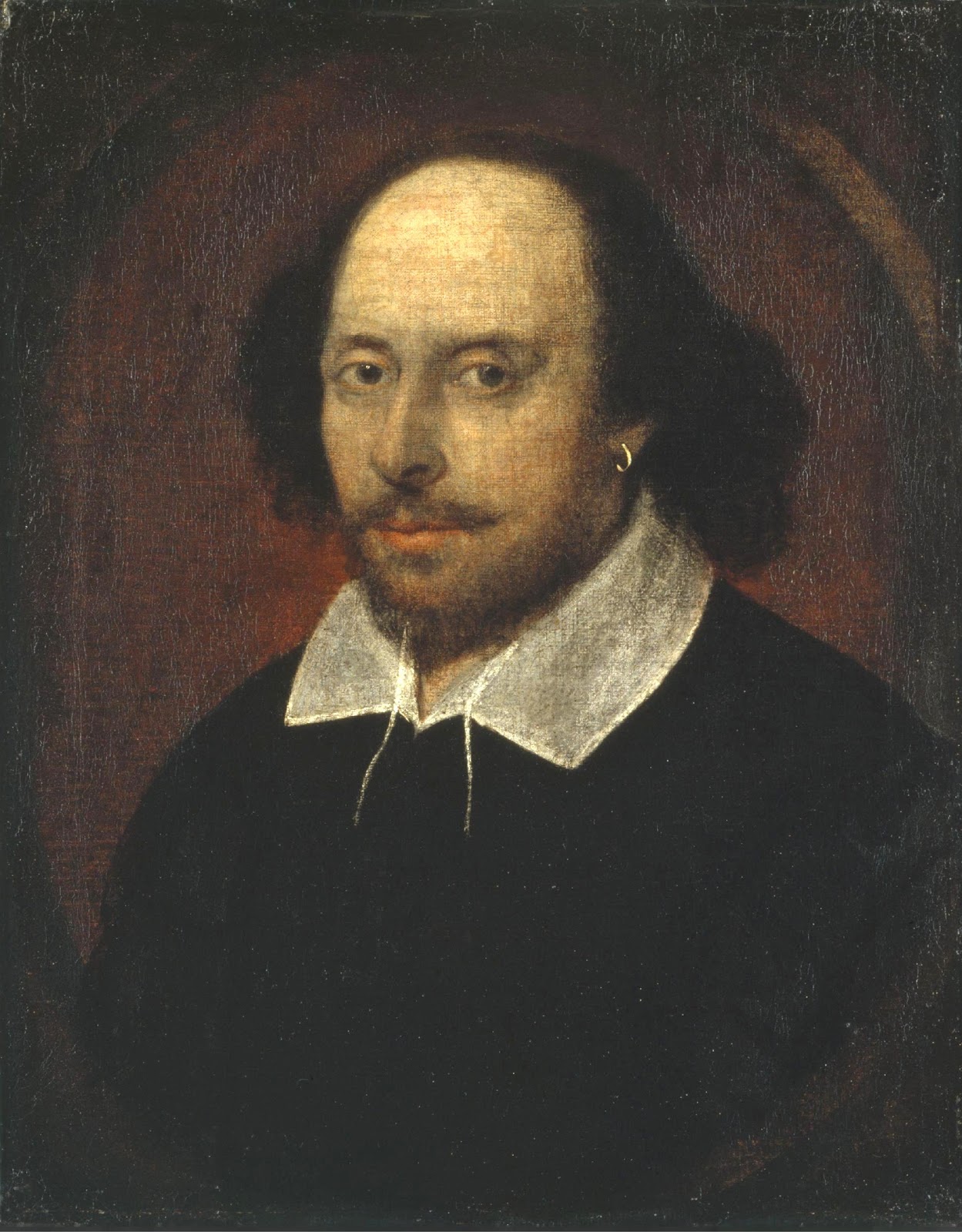
Try as they may, and publishers spend fortunes on having them photographed in different styles, they never seem to look charismatic. They never look as if they've actually been anywhere or done anything. It doesn't matter how hard the imagemakers work you still look at the picture and think, here's a man who's spent days looking out of windows trying to think of a rhyme for the word "orange". He hasn't been doing much other than type.
I was in the National Portrait Gallery just now and found myself looking at the Chandos portrait of William Shakespeare (above). They can't prove it is Shakespeare. I'm a believer. The greatest writer of the ages and he looks like the owner of a small haulage business somewhere in the Midlands. It must be him.
Friday, June 01, 2012
"I look up to him and I look down on him..."
My favourite bit of the BBC's excellent The Coronation of Queen Elizabeth II was the appearance of the reliably waspish art historian Roy Strong (born in Winchmore Hill, went to Edmonton County School and London University, subsequently re-invented himself as the grand aesthete) to deliver the withering observation that Viscount Eccles (Winchester and Oxford), the Minister of Works who oversaw the Coronation, had "a flash of car salesman about him".
The English class system is far more subtle and plastic than people give it credit for and its most reliable observers are always the people who get close enough to want in. It took the Irishman George Bernard Shaw to observe "it is impossible for one Englishman to open his mouth without making another Englishman hate him".
Wednesday, May 30, 2012
Are the Mirror changes part of bigger changes for editors?
I've just heard on the Media Show that Lloyd Embley, the quiet man who's replaced the editors of the Mirror and the Sunday Mirror and will be at the helm of the new seven-day paper, is "a good production journalist".
At which point I would be failing in my trumpet-blowing duty if I didn't point out that in my current column for In Publishing I said:
At which point I would be failing in my trumpet-blowing duty if I didn't point out that in my current column for In Publishing I said:
Editors used to be picked for their ability to predict what was about to be interesting to people. In the future, they'll be picked for their ability to note where the interest is and minister to it.I was talking about magazine editors but I think the point holds good.
Thinking about Doc Watson, who died yesterday
One of the most educational records I ever bought was The Nitty Gritty Dirt Band's 1972 double album Will the Circle Be Unbroken. The idea of putting a bunch of hippies in the studio with the old time country artists that they admired seemed rather controversial at the time. The performances were beautiful and they kept an additional tape running throughout to capture the respectful exchanges between the youngsters and the older, shorter-haired musicians like Mother Maybelle Carter, Merle Travis, Earl Scruggs, Roy Acuff and Doc Watson.
Watson, the guitarist and singer from North Carolina, seemed an even older and more venerable figure than the rest, maybe because he was blind. In those days there seemed to be an immense gulf between the ancients and the revivalists. In fact he was only forty-nine, the same age as Johnny Depp is today. "Will The Circle Be Unbroken" helped introduce him to a new audience and ensured that he had an even longer career reviving his music than he did playing it in the first place. He died yesterday at the age of 89.
Watson, the guitarist and singer from North Carolina, seemed an even older and more venerable figure than the rest, maybe because he was blind. In those days there seemed to be an immense gulf between the ancients and the revivalists. In fact he was only forty-nine, the same age as Johnny Depp is today. "Will The Circle Be Unbroken" helped introduce him to a new audience and ensured that he had an even longer career reviving his music than he did playing it in the first place. He died yesterday at the age of 89.
Tuesday, May 29, 2012
Has this shortarse been to his last standing gig?
Last night I went to see Esperanza Spalding at Koko. She was good. However I fear that unless I have a belated growth spurt this may be the last standing gig I go to. The last time I went to Koko was to see M.Ward. He played sitting down which meant that there was no chance of me catching sight of him at all from my position on the floor.
This time I got there earlier and I was on my own which meant I could find a niche up in the Gods where I could see the stage. The problem was that as more and more people arrived they took up positions on the stairs in order to get a view and I was hemmed in, unable to move forward, backwards or sideways. Theatregoers or football fans wouldn't remain standing in the same place for 90 minutes before the entertainment begins. Why do music fans put up with it?
Some of the best gigs I've ever been to were at old theatres like Koko but that was in the days when I hadn't been up since six in the morning. The experience was still novel enough for me to put up with the discomfort. I'm not sure I'm going to do it any more. I spoke to Esperanza Spalding this morning. She explained she played venues where they could get enough paying customers in to enable her to pay her 12-piece band. That makes sense for her. Nonetheless this short arse resigns.
Monday, May 28, 2012
Soon as you're dead you're fair game for Vanity Fair

This is the cover of the new Vanity Fair, one of the most upmarket (or "upscale" as the Americans call it) magazines in the world.
The two features it's leading on are: "Marilyn: The Lost Nudes" and "Whitney Houston...her toxic choices and tragic final days".
They'll probably sell well. All magazines love a prurient story about a famous person. That's because all magazine readers love a prurient story about a famous person. There are absolutely no exceptions to this rule. The only thing that makes Vanity Fair upmarket and the National Enquirer downmarket is that the former waits until you're dead to write it.
Sunday, May 27, 2012
Is this where they invented celebrity photography?

As a photographer you get to know human nature and the one thing about human nature it that it is the most famous people who think they are not getting enough of the world's attention.I like that. I hope they've found room for it in the Steppenwolf stage adaptation which is running in Chicago at the moment.
Friday, May 25, 2012
Hitler's Children
Documentaries with the word Hitler in the title are such a staple of British TV that when we're looking for something worth watching my wife says "what's on the Hitler channel?" Most of them have nothing new to say. This week's BBC-2 film Hitler's Children was different. Its subjects were the son of Hans Frank, the ruler of wartime Poland, the daughter of Amon Goeth, commandant of the Plaszow concentration camp (played by Ralph Fiennes in Schindler's List), the grandson of Rudolph Hoess, commandant of Auschwitz and two middle-aged women who had to deal with being called Goering and Himmler.
Most documentaries with the word Hitler in the title are happy to provoke a satisying shudder. This didn't even bother to do that. There was no recounting of specific atrocities. It was assumed we knew enough to be able to imagine that for ourselves. Instead you had a serious examination of what it's like to live with guilt for things you didn't do. There were elements of the standard 21st century documentary about it - there has to be "a journey to find out" in every film - but it paid its audience the great compliment of not telling them at the beginning of the film all they were going to find out at the end. See it if you can.
Most documentaries with the word Hitler in the title are happy to provoke a satisying shudder. This didn't even bother to do that. There was no recounting of specific atrocities. It was assumed we knew enough to be able to imagine that for ourselves. Instead you had a serious examination of what it's like to live with guilt for things you didn't do. There were elements of the standard 21st century documentary about it - there has to be "a journey to find out" in every film - but it paid its audience the great compliment of not telling them at the beginning of the film all they were going to find out at the end. See it if you can.
Wednesday, May 23, 2012
Do we have to talk like this, "people"?
Good call.
Awesome.
That sucks.
Yay!
Let's do this.
Stay safe, people.
Freaking.
Fail.
Thanks to Twitter and Facebook there aren't many days that go by without my having to read one of those eight expressions. Why do I find them so irritating? It's partly because they sound as manifestly false as Steve Maclaren's Dutch-inflected English. It's mainly because they are all deliberate overstatement and I don't like to see spoken English, which quietly prides itself on selecting the word five degrees below the emotion in question, go in that direction.
Flavours of yoghurt are not "awesome". "Let's do this" implies an act of physical courage, not a trip to the multiplex. "Good call" should announce a decision which could have had dire consequences, not the choice of a pop record.
It seems particularly inappropriate to hear this kind of wild overstatement employed by a generation whose knowledge of human extremity hasn't gone much further than a Glastonbury lavatory. Contrast this with the Edwardian actor Ernest Thesiger who survived the battle of The Somme. Since that battle must have been "a mixture of surprise and fear", he would have been justified in using the word "awesome". Instead, when he was asked what it was like he reputedly said "oh my dear, the noise, the people!"
Tuesday, May 22, 2012
The most precious music costs next to nothing
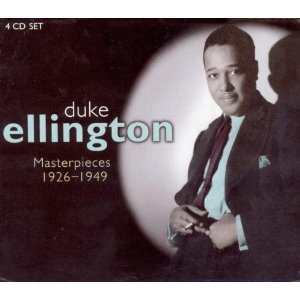
It does pretty much everything I would want music to do. And it costs buttons.
Masterpieces: 1926-1949 (4CD)

Monday, May 21, 2012
A little Eurovision dirty work never hurt anyone
I've just finished Savage Continent by Keith Lowe, which is the most depressing book I've ever read. It's about "Europe in the aftermath of World War II". Some of it - such as the German death camps, the Russian rape of Germany and the fate of millions of displaced people - I knew about. Much of it - such as the Soviet crushing of any dissent on their side of the Iron Curtain and their deliberate aggravation of existing ethnic tensions - I could have guessed at. What's most depressing is the amount I didn't know about and just how much killing was still going on when the world was allegedly at peace.
It would look tasteless to list any specific examples here. If you really want to know what people are capable of doing to their neighbours you should read it. You come away from it mildly nauseated, newly aware of the fact that every nation or national group has plenty of reasons for hating the people next door and that the modern continent of Europe, this green and pleasant, effectively borderless land latticed by motorways, theme parks, shopping malls and holiday resorts, has been built on top of a charnel house.
Now that I've finished the book I've got time to listen to all 42 entries for this year's Eurovision Song Contest in time for tomorrow night's Front Row. I don't know whether anyone has ever claimed that the brotherhood of Eurovision could heal the wounds of war. One thought struck me. If this weekend any of the countries of Europe want to settle an ancient score or two by deliberately bearing false witness or marking down the entry of their ancient enemy, that's absolutely fine with me. I've just been reading about how they used to do it.
Friday, May 18, 2012
You can't blame the 60s for flares
Earlier today somebody sent me a picture taken in the street in 1967 and demanded to know why nobody was wearing flares.
Despite what most contemporary art directors might think, flares hadn't really arrived in 1967. They were around - generally known as bell bottoms - but they didn't become the uniform of youth until a few years later. The costumes The Beatles wore on the covers of Sg Pepper and Magical Mystery Tour in 1967 were adventurous in most respects but their trousers were narrow and straight.
If you look at this picture of young men climbing the lighting towers at Woodstock, which was two whole years later in 1969, they appear to be wearing straight-legged Levi's.

The first pair of flares I remember owning were grey herringbone jobs bought at Harry Fenton. That would have been in the winter of 1969-70. Not long after that they became the only acceptable shape. Things stayed that way until 1977.
If you want to blame one decade for flares, blame the 70s, not the 60s.
Thursday, May 17, 2012
Welcome back to Test Match Special: the sweet music of men talking absolute balls
I've been working at home today, intermittently listening to Test Match Special's coverage of the first England-West Indies Test from Lord's. I don't have to turn it on to keep up with the score. Twitter will do that. Like many others I put it on for the company and conversation.
One of the first things I heard this morning was the Wodehouse tones of Henry Blofeld describing the Warner Stand as being "brimmers"; then we had Viv Richards musing, in his Antiguan burr, on the challenges of being "aksed" to bat first. The TMS team has the vocal blend of a great gospel quartet.
The Barbadian commentator Tony Cozier and Geoff Boycott didn't blink as they ran through the line-ups who contested the same series in 1953. Blofeld casually mentioned Cassius Clay, the name Ali discarded in 1964. TMS is the only corner of the BBC that doesn't feel it has to apologise for not being youthful. Even Phil Tufnell, who is young by the standards of the team, referred to another commentator as looking "a Bobby Dazzler".
Retired sportsmen never seem to forget a single game or team mate. Cricketers play for longer and can call on a richer storehouse of memories. I don't know who Jonathan Agnew was talking about but I heard him say:
The beauty of that is that it really doesn't matter who he's talking about. By the same token it doesn't matter what's going on in the match as long as those men in the TMS box can sustain their gently rippling stream of speculation, analysis, reminiscence and banter. It's a joy. Long may it continue.
One of the first things I heard this morning was the Wodehouse tones of Henry Blofeld describing the Warner Stand as being "brimmers"; then we had Viv Richards musing, in his Antiguan burr, on the challenges of being "aksed" to bat first. The TMS team has the vocal blend of a great gospel quartet.
The Barbadian commentator Tony Cozier and Geoff Boycott didn't blink as they ran through the line-ups who contested the same series in 1953. Blofeld casually mentioned Cassius Clay, the name Ali discarded in 1964. TMS is the only corner of the BBC that doesn't feel it has to apologise for not being youthful. Even Phil Tufnell, who is young by the standards of the team, referred to another commentator as looking "a Bobby Dazzler".
Retired sportsmen never seem to forget a single game or team mate. Cricketers play for longer and can call on a richer storehouse of memories. I don't know who Jonathan Agnew was talking about but I heard him say:
He turned up the next day and said sorry and gave him a box of eggs. Not even chocolates. Eggs. We used to call him Crime. You know, crime never pays.
The beauty of that is that it really doesn't matter who he's talking about. By the same token it doesn't matter what's going on in the match as long as those men in the TMS box can sustain their gently rippling stream of speculation, analysis, reminiscence and banter. It's a joy. Long may it continue.
Wednesday, May 16, 2012
Do all rich people have that rich person glow?
We had Graham Gouldman in the office the other day to take part in The Word podcast. It was the morning after he'd played the Albert Hall with 10cc. He came on his own and parked his car round the corner. He couldn't have been more pleasant. He couldn't have made less fuss. There were absolutely no airs about him.
After he'd gone, somebody said "he'll be richer than God, I suppose". Since he co-wrote "I'm Not In Love" , "The Wall Street Shuffle", "Art For Art's Sake" , "The Things We Do For Love", "Dreadlock Holiday" for them and the likes of "Heartful Of Soul" for The Yardbirds and "Bus Stop" for The Hollies it seemed reasonable to suspect that his PRS cheques alone would make interesting reading.
But here's the thing. He didn't look rich. Didn't act rich either.
Usually when you encounter rich people they have some outward signs of the life of comparative ease that they lead. Because they have more holidays than the rest of us they've often got a kind of glow, which comes from either a sun tan or a regular facial. Teeth have generally been fixed. Hairlines have had some work. Even those who dress down tend to dress down expensively. They tend to be more toned than their contemporaries, thanks to trips to the gym in the basement or visits from the personal trainer. There's often a watch or item of jewellery which those who notice these things can't help but notice.
This is not to say that Graham Gouldman looked in need of any of these things. He just didn't look rich, that's all.
Tuesday, May 15, 2012
Does it matter whether DJs choose their own music?
Huey Morgan has a go at Lauren Laverne on Twitter, implying that while he "builds" his programme by hand, she gets hers handed to her. I love it when deejays have cat fights. In public they're always fulsome in their praise and respect for each other. In private they're absolute bitches about each other and the most popular gibe has always been "they get handed a box of records and a running order by their producer". Now that most radio stations are controlled by a hard drive many don't even have to open a box any more.
But does it matter whether DJs choose their own music? Not from the point of view of "credibility", whatever that is. Most of them have advertised tastes which are very orthodox. In my experience the DJs who make a song and dance about their passion for music are often more bogus than the people who just turn up and do a job. But it matters if you think DJs should be playing records that they feel like hearing at the time they feel like hearing them, that they want to put you in the same moment that they're in. Which I suppose I do.
But does it matter whether DJs choose their own music? Not from the point of view of "credibility", whatever that is. Most of them have advertised tastes which are very orthodox. In my experience the DJs who make a song and dance about their passion for music are often more bogus than the people who just turn up and do a job. But it matters if you think DJs should be playing records that they feel like hearing at the time they feel like hearing them, that they want to put you in the same moment that they're in. Which I suppose I do.
Twenty highlights of a stag weekend in Magaluf
Nobody has stag nights any more. One of the guys in our office has been on his stag weekend in Magaluf, which seems to be the form. As is traditional he recounted the highlights when he return. I scribbled down a few notes.
1. Rubber fist
2. Viking helmet
3. Drawing on face
4. Cable-tied
5. Absinthe
6. Sick in a pint mug
7. Dare cards
8. Kiss as many men as possible
9. Eighteen-strong
10. My brother in law the vicar
11. "All the curry poured on me"
12. "Knocked her hair extensions out"
13. Klinsmann dive on table full of drinks
14. Clinically obese man in Teletubbies suit
15. Best man went to bed in wrong hotel
16. Girl selling syringes of Sambuca
17. Ripped off the nappy while singing It's Raining Men
18. Suicide tequilas
19. "Hit my best man round the face with a flip flop"
20. "The biggest balls I've ever seen"
Sunday, May 13, 2012
Donald "Duck" Dunn was the reason a generation of dads wear their sex face on the dance floor

Steve Cropper was also on that tour. Now he and Booker T are the only members of the MGs left. The drummer Al Jackson, Dunn's partner in the driest rhythm section that ever drew breath, died in 1975. Listening to Booker T & The MGs provides me with the same kind of pleasure as other people get from listening to the idling engine of an expensive motor car. At first they sound like one instrument. As you get in closer you can hear how much each of the four individual parts is contributing. They make sure they never quite interlock. They draw near and then stand off. By standing off they create the space in the air where the record's magic lives.
As a rule bass players get even less recognition than drummers. This is wrong in so many ways. If it wasn't for bass players like Duck Dunn - and there weren't many bass players like Duck Dunn - the music would have no bottom and Dad wouldn't wear his sex face on the rare occasions he hits the dance floor.
Friday, May 11, 2012
They wind you up, your mum and dad

The sources of their annoyance are not the same things that enrage your spouse about you. She's not your issue and so she's not worried that she's like you. Basically, your kids find you embarrassing and aggravating because they're your kids and they're worried they might turn out like you.
When these moments occur across the dinner table I flash back to the things which used to drive me mad about my own parents. If I hadn't loved them I would have been indifferent to them. I don't worry about it. I'm now at an age where I'm starting to identify with the allegedly out of touch parent figure in every sitcom. Marty Crane, I'm with you.
Thursday, May 10, 2012
Forty-nine years ago today and forty-nine years before that
 Forty-nine years ago today the Rolling Stones recorded their first single for Decca. If you go back forty-nine years before that Gavrilo Princip was probably acquiring the revolver he was to use a couple of months later to assassinate Archduke Franz Ferdinand and begin the series of events that led to the First World War.
 When the Stones were making that record the producers were putting the finishing touches to the historical series The Great War, which came out the following year and set the template for TV documentaries. This contained interviews with men who didn't seem old enough to be called "veterans". Most of them were in their late sixties, much like the Stones are now.
Makes you think. I'm never sure precisely what, but it makes you think.
Wednesday, May 09, 2012
Shakespeare does it again - with help from Neil MacGregor
Shakespeare's Restless World, the series of 15 minute programmes that Neil MacGregor is presenting on Radio Four at the moment, isn't a disappointment. (After A History Of The World In 100 Objects most things would have been.) Each Shakespeare programme has a different theme - religion, conquest, Ireland, science or Plague - explored by reference to an object - a ceremonial cup, an apprentice's cap, a model ship, a flag or a poster. You come away from each one dazzled by Shakespeare's ability to take the kind of thoughts it exhausts the rest of us merely to think and render them as verse. You listen to each one with fresh admiration for how he managed to take the news of his day and turn it into the wisdom of the ages. You listen to each one wondering why radio programmes seem to have more substance than time while TV programmes seem to have more time than substance.
Tuesday, May 08, 2012
Every decade has a dream
This week's Mad Men finishes with Don Draper trying to get his head around The Beatles Tomorrow Never Knows. "I was raised in the thirties," he says. "My dream was indoor plumbing."
I don't usually think decades can be summarised so neatly but this line seems about right. In the forties they must have dreamed of peace and all that could flow from it. In the fifties they dreamed of comfort. In the sixties my generation at least dreamed of pop music. In the seventies we dreamed of a glamorous past. In the eighties we stopped dreaming of things because we discovered they could be had on credit. In the 90s we dreamed of technology. In the noughties we stopped dreaming of technology because we suddenly had it all.
Now we dream of being able to afford it.
Sunday, May 06, 2012
Pure Pop For Then People
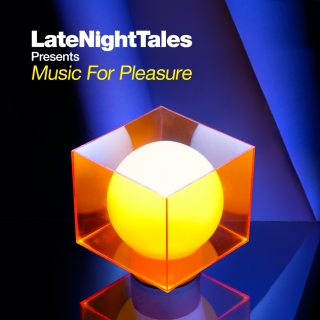
Blue Eyed Soul
Funk Rock
Disco Rock
and Yacht Rock".
The sleeve note says it aims to "evoke the ghosts of Laurel Canyon for one last rallying cry". Actually most of the selections - Robert Palmer's "Every Kind Of People", Steve Miller's "Fly Like An Eagle", Boz Scaggs "Lowdown", ELO's "Showdown", Todd Rundgren's "Be Nice To Me" and 10cc's "I'm Not In Love" etc - had very little to do with Laurel Canyon, due to their being northern Californian, not Californian at all or not even American.
But the past is whatever the present wants it to be, particularly when it comes to music. What's slightly more puzzling is the genre menu at the top. All of these terms were invented after the event. They were designed to describe the horse once the horse had bolted. At the time these were all great pop records. They were all recorded as things were starting to get a little electronic at the edges and records wanted to sound above all modern. That's why they still sound faintly ethereal and share a sun-blasted vibe. These acts - Michael McDonald, AWB, Hall & Oates and Bread - gloried in modernity every bit as much as Kraftwerk did. It's just they didn't talk about it in interviews. They just wanted hits. In fact Music For Pleasure is a title that doesn't need much qualification.
Saturday, May 05, 2012
Nicorette made me stand up Mick Jagger

We used to amuse ourselves on plane rides by smoking and so I decided to pop a square of Nicorette whenever I would ordinarily have had a cigarette. That probably means I had about a dozen between London and Bridgetown. My ears must have been fluttering and buzzing. When we got to the hotel somebody decided we should have rum stingers. More Nicorette. More stingers. Bed. When I woke in the morning I couldn't speak. We had to postpone the filming with Mick Jagger. At first I thought I'd been stricken with a very bad sore throat. Obviously I hadn't. It was the Nicorette. Still, haven't had a cigarette since.
Friday, May 04, 2012
"Just Another Thing": bread makers of the internet
Couple of weeks ago I bumped into James Brown in the West End. He's always got something new to enthuse about. This time it was something he'd done with his Sabotage Times venture which was, he promised, "the end of podcasts". I wasn't very sure whether for most people podcasts could ever have been said to have begun but I had a look. It was a bunch of people (nine is the limit at the moment) chatting about football on video with James as moderator. Technology was a bit clunky but you could see what they were getting at.
Back at the office I told Fraser and he looked into it. Turns out it's a Google + product called Hangouts. The point of telling you this is because Fraser's sign-off resounded in my memory. It is, he said, "just another thing".
Just Another Thing. If the world could be said to need a further book about the internet it ought to be called Just Another Thing. Every month along comes a new way of slicing our attention and dicing the material. It always promises to be transformational. You hurry to install it, you show it to a few mates, and then you consign it to the digital equivalent of the loft where it can gather dust alongside the nerd equivalent of the rowing machine and the bread maker.
While tapping out this post I've got an email from Lefsetz. It starts with this line. "Playlists. They're the new radio." It's more likely that they're Just Another Thing.
Wednesday, May 02, 2012
Are we post-stuff?
Over the last ten years the music business has discovered that while it can't get people to pay more than a couple of pounds for a CD, those same people will pay anything up to £50 to go and see that artist perform live. Maybe this isn't so much a consequence of the digital revolution as the harbinger of a more significant change which has been taking place over the same period of time. Put concisely, it means people would rather have experiences than stuff.
Look around. Premium sporting occasions, expensive rock festivals, blockbuster movies, premium-priced meals, lavish family occasions, adventurous holidays, beauty treatments, weekend retreats, the Hockney exhibition: people seem increasingly relaxed about spending money on things which don't last rather than, as they might have done in the past, on items that are supposed to give long term satisfaction or advertise the owner's status.
I've noticed this in my own offspring. There are a few key branded goods that they feel they must have - a Blackberry, a pair of Ugg boots for instance - but beyond that they are far more likely to get excited about a visit, a concert or a gathering of friends.
I'm wondering, are we post-stuff?
Monday, April 30, 2012
A bad day for Her Majesty's Football Press
Today is another bad day for Her Majesty's Football Press. They've been backing Harry Redknapp with one voice for the England job and now it looks as if it's going to be Roy Hodgson. When you consider that they spend their lives in press conferences they are tin-eared when it comes to reading corporate signals. A couple of months ago I heard David Pleat, a man who does know how boardrooms work, saying on Five Live that he thought the FA were keen on appointing a man who would have a plan for all the age-ranges and would be prepared to base himself near the FA's new football centre at Burton. If this was true Harry Redknapp was never going to be the man. And so it proved.
Sunday, April 29, 2012
Don't critics get the horn?
There's a book at the top of the best sellers called Fifty Shades of Grey. I haven't read it but I want to to because lots of people have told me it's rubbish. They can't agree what's rubbish about it. Joanna Biggs in the Literary Review said it was "insanely badly written" while Jenny Colgan in The Guardian thought it was "eminently readable". The reason these people and lots of others have gone out of their way to point out its shortcomings - through think pieces in the big papers and waspish exchanges over Sauvignon Blanc - is that it's what when I was at school they called a Mucky Book. Nowadays they call it erotica. Its purpose is to give people the horn, just as the purpose of house music is to make people want to dance.
This all seems straightforward. So straightforward that I've never been able to understand why people who've been to university in general and critics in particular always claim that while things like this give the rest of us the horn, it doesn't have the same effect on them. Oh no. They always pretend they find it funny, which is pretty condescending of them when you think about it.
They were the same with The Joy Of Sex, Nine and a Half Weeks, Bouquet Of Barbed Wire, Pirelli calendars, Madonna's Sex book, Emmanuelle, all the rest of the salacious phenomena that the rest of us went out and bought, watched, read or at least stole surreptitious glances at in our millions. It might have the rest of us walking like tripods or squirming in our seats but it simply doesn't make a dent in the steel pants with which these people's critical acuity has apparently armoured them.
It doesn't make sense. Even the most in-bred food critics can appreciate a McDonalds once in a while, can't they? Not everything in life has to be run through the same elevated filter. Some things in life you're just supposed to feel. Or is it possible that they did feel it and they're not telling the truth about what they felt?
Saturday, April 28, 2012
John Le Mesurier: It's All Been Rather Lovely
Like all these BBC-4 biographical films, which are really clipshows under another name, this was 40% longer than it needed to be. It did have one good joke. Clive Dunn remembered John asking a policeman where he could find Alcoholics Anonymous. "Do you want to join, sir?" "No," said John. "I want to resign."
Thursday, April 26, 2012
What *didn't* we have in the 70s?
Alternative comedians
Mobile phones
Your wage paid by cheque or money transfer
Clean air indoors
Email
Much choice on TV or Radio
Cashcards
Time shifting
Minutes silences at football games
Everyday fireworks
Bottled water
Organic food
Proper coffee
Cosmetic surgery
Life coaches
"Products" for men
Personal trainers
Oyster cards
Automatic ticket barriers
Surveillance cameras
Cheap weekend flights to Europe
Channel tunnel
Computer games
Smokeless coal
Colour pictures in newspapers
Call centres
Unleaded petrol
Microwaves
Hair extensions
Cycle helmets
Plastic zips
Skimmed milk
Sunday opening
Drinking in the afternoon
Live football on the TV
Lite bites
Nouvelle cuisine
Fax
"PC"
Urban foxes
Attack dogs
Leaf blowers
Women vicars
Four by fours
Outdoor heaters
Uplighters
Alcopops
Women drinking pints
Low tar cigarettes
Hen parties and stag weekends
Stretch limos
School proms
Airport security
Etc
Mobile phones
Your wage paid by cheque or money transfer
Clean air indoors
Much choice on TV or Radio
Cashcards
Time shifting
Minutes silences at football games
Everyday fireworks
Bottled water
Organic food
Proper coffee
Cosmetic surgery
Life coaches
"Products" for men
Personal trainers
Oyster cards
Automatic ticket barriers
Surveillance cameras
Cheap weekend flights to Europe
Channel tunnel
Computer games
Smokeless coal
Colour pictures in newspapers
Call centres
Unleaded petrol
Microwaves
Hair extensions
Cycle helmets
Plastic zips
Skimmed milk
Sunday opening
Drinking in the afternoon
Live football on the TV
Lite bites
Nouvelle cuisine
Fax
"PC"
Urban foxes
Attack dogs
Leaf blowers
Women vicars
Four by fours
Outdoor heaters
Uplighters
Alcopops
Women drinking pints
Low tar cigarettes
Hen parties and stag weekends
Stretch limos
School proms
Airport security
Etc
Monday, April 23, 2012
Isn't there something slightly camp about four blokes in a TV studio *all* wearing open-necked shirts?
Every week all the panellists on both Match of The Day and Match Of The Day II are all wearing shirts. There's not a jacket, not a sweater, not a polo shirt, not a cardigan and not a tee shirt between them.
How does this work? Can't be by accident. There must be a policy of some sort. Somebody must either ring up the members of the panel before they do the show and say "can we just check? What colour shirt will you be wearing?" or there must be a wardrobe department with lots of freshly ironed plain coloured (can't do stripes on TV - they "flare") smart shirts in lots of different sizes standing by.
I'm interested in two things:
1. Why has somebody decided that open necked shirts are the only appropriate way to dress the MOTD panel?
2. Has it never occurred to anyone that four blokes in freshly pressed shirts just look a bit camp?
Sunday, April 22, 2012
A terrific read and a terrible story
A couple of months ago I caught "A Good Read" on Radio Four. The guests were Rachel Johnson and Martin Kelner. She chose Still Missing by Beth Gutcheon and he chose London Belongs to Me (Penguin Modern Classics) by Norman Collins. They both enthused about each other's choices so I read them both. I really enjoyed both of them but the Beth Gutcheon story is one of those rare books that you go round recommending to people. My oldest daughter devoured it, as did my wife and the other day I marched a friend into the offices of the British publisher Persephone and insisted he bought a copy. A week later he was thanking me.
It was written in 1981 and it tells the story of a six year old boy who goes missing on his way to school. I wouldn't dream of telling anyone what happens at the end. Suffice to say it's one of those books which rescues the word "gripping" from the land of hyperbole.
The other day I was looking in the New York Times when my eye was drawn to a story about the New York police digging up a basement in a building in the SoHo district. This was in connection with the still unsolved case of Etan Patz, a six year old boy who went missing on the way to school in 1979. He still hasn't been found and the anniversary of his disappearance is now America's Missing Children Day. I wondered whether this might have been the inspiration for the story. It turns out it was. The Patzes and Gutcheons were neighbours at the time and the author knew the boy.
If you were a writer and you suddenly found yourself near the centre of a terrible true-life incident like that, you'd be pretty much compelled to write about it. You just would, wouldn't you?
When a film was made of the story in 1983 there was some publicity suggesting that it was unseemly to write a work of fiction based on a case which was still so open and painful. His parents, who are no doubt as well known in the US as the McCanns are over here, have never moved from the house. You just wouldn't, would you?
Thursday, April 19, 2012
Levon Helm and the true nature of singing
The American Civil War is the key event in their history. More Americans were killed during that war than in every subsequent conflict the nation was involved in, up to and including the Korean War. The events of 1865, when the Confederate states were crushed, starved and then humiliated, aren't reflected in many rock songs. It's amazing that Robbie Robertson, a Canadian, had the nerve to write one about it. Levon Helm, who came from Arkansas, which is as Southern as you get, always said he took him to the library to make sure he got the historical detail right but his greatest contribution to its authenticity was in singing it. For that alone he was its co-author.
"Virgil Cain is the name and I served on the Danville train/Til Sherman's cavalry came and tore up the tracks again". That's what the Federal troops did to make sure that the Conferederates couldn't re-supply. Every time the railway line was relaid they ripped it up. Levon Helm sings it like a man into whose soul a certain amount of iron has just been introduced. As somebody said to me the other night, no other record inserts you into an historical moment as quickly and as dramatically as that one does. And that, Simon Cowell, is singing.
"Virgil Cain is the name and I served on the Danville train/Til Sherman's cavalry came and tore up the tracks again". That's what the Federal troops did to make sure that the Conferederates couldn't re-supply. Every time the railway line was relaid they ripped it up. Levon Helm sings it like a man into whose soul a certain amount of iron has just been introduced. As somebody said to me the other night, no other record inserts you into an historical moment as quickly and as dramatically as that one does. And that, Simon Cowell, is singing.
Wednesday, April 18, 2012
Everything on TV becomes TV drama
I've avoided looking at any courtroom footage of the Oslo murderer, just as I avoided seeing any footage of Fabrice Muamba keeling over on the White Hart Lane pitch. I don't need to see either. I don't need to be further inflamed or shocked or moved. I don't need television telling me what to feel. I know what I feel about both events and I can imagine what I would feel if I saw either.
I can't say I'm in favour of the televising of British courts. Anything on TV - football, parliament, pop music - very quickly becomes TV. Once he's playing for the cameras even the Oslo murderer will find that some people will warm to him. If we only saw him as one of those courtroom illustrations it wouldn't happen.
I can't say I'm in favour of the televising of British courts. Anything on TV - football, parliament, pop music - very quickly becomes TV. Once he's playing for the cameras even the Oslo murderer will find that some people will warm to him. If we only saw him as one of those courtroom illustrations it wouldn't happen.
Sunday, April 15, 2012
Finding the sweet spot in the argument about the Universal-EMI merger
I'm sure Martin Mills, the chairman of Beggars Group, has reasons for not wanting the merger of Universal and EMI to go ahead (and they may be good ones) but I'm not sure that it's because it stands to squeeze out "edgy, left field artists". According to an interview in the Telegraph he says:
The "edgy, left field" argument is a classic example of the kind of argument businesses and pressure groups employ on public forums like the Today programme, not because they really believe it but because they know it will play into the larger narrative of the uninformed. The uninformed are always looking for a baddie and a goodie. This kind of argument rarely says "we would like things to stay as they are because we're doing fine, thanks". Instead it says, "if this change takes place then an entire culture will be brought down and this cute puppy will be drowned". That's the kind of argument that plays to the sweet spot. It's surprising how often it prevails.
"When one party has the ability to be so dominant, it's going to be difficult for anything outside the mainstream to come through. It [puts pressure] on the space on shop shelves and magazine front covers for less mainstream artists."To which we might say, which shop shelves is he talking about and, while we're about it, what magazine covers? If you've got a record that people want, Tesco will find room for it and the valve that really controls access to public exposure is operated by BBC radio, not by any magazine. But record execs never go on the record about the BBC. Off the record they rarely talk about anything else.
The "edgy, left field" argument is a classic example of the kind of argument businesses and pressure groups employ on public forums like the Today programme, not because they really believe it but because they know it will play into the larger narrative of the uninformed. The uninformed are always looking for a baddie and a goodie. This kind of argument rarely says "we would like things to stay as they are because we're doing fine, thanks". Instead it says, "if this change takes place then an entire culture will be brought down and this cute puppy will be drowned". That's the kind of argument that plays to the sweet spot. It's surprising how often it prevails.
Saturday, April 14, 2012
Record reviewing and the Control Sample
Everybody putting out a record knows the odds are stacked against them. Of course they don't know just how tough those odds are. If they saw even the puny amount of CDs that I get sent for review they'd give up. If they saw how many a Radio Two producer gets they'd tell all their friends to give up as well.
But that's not the whole of the problem. They think they're competing against the other records that came out the same month. What they're really competing for is our attention, which is just too terrifying to think about. And our attention doesn't have to be restricted to what came out this month. Even assuming that we're in the mood to listen to or buy a record that attention is most likely to be occupied by something we already like.
And this a problem that the acts of today have to face which the acts of the 60s and 70s didn't. Unless they're working in new genres such as hip hop it's likely that whatever they do will have already been done first and better by somebody thirty years ago. In fact they've probably been "inspired" by the very record that outshines them. When Joni Mitchell made those first few records nobody had been down those paths before. When Laura Marling sits down to write songs she knows that wherever she goes lots of people have been before and quite a lot of them were pretty good.
 As I write this I have at my left hand a copy of Burning Spear's 1976 album "Man In The Hills". I've actually only just heard this record. Until recently I never went further than "Marcus Garvey". Anyway "Man In The Hills" is brutally good. I keep it close at hand as my Control Sample. Not far behind it is a copy of "Revolver" and Nick Lowe's "The Old Magic", both of which could easily be Control Samples.
 The presence of the Control Sample means that I have to decide whether I'd rather spend the next forty minutes of my life reaching a further level of intimacy with something I know is worth the investment or risk it on something untried from my huge great box of new stuff (right), most of which, I have learned through experience, will never be fit to dust the shoes of those three great records. That's why lots of the time the Control Sample wins.
Obviously I'm just an unfeeling brute who has been made calloused and cynical by the amount of listening I've had to do over the years. But my attitude to hearing something new is just a more pronounced version of what the listening public feels. They're not just measuring your record against what else is at this week's starting gate. They're measuring it against the riches of pop history, all of which is just a click away.
Maybe the acts should start measuring their records against their own Control Samples while they're making them.
But that's not the whole of the problem. They think they're competing against the other records that came out the same month. What they're really competing for is our attention, which is just too terrifying to think about. And our attention doesn't have to be restricted to what came out this month. Even assuming that we're in the mood to listen to or buy a record that attention is most likely to be occupied by something we already like.
And this a problem that the acts of today have to face which the acts of the 60s and 70s didn't. Unless they're working in new genres such as hip hop it's likely that whatever they do will have already been done first and better by somebody thirty years ago. In fact they've probably been "inspired" by the very record that outshines them. When Joni Mitchell made those first few records nobody had been down those paths before. When Laura Marling sits down to write songs she knows that wherever she goes lots of people have been before and quite a lot of them were pretty good.


Obviously I'm just an unfeeling brute who has been made calloused and cynical by the amount of listening I've had to do over the years. But my attitude to hearing something new is just a more pronounced version of what the listening public feels. They're not just measuring your record against what else is at this week's starting gate. They're measuring it against the riches of pop history, all of which is just a click away.
Maybe the acts should start measuring their records against their own Control Samples while they're making them.
Friday, April 13, 2012
What about 50 things we did before we were 12 that we'd hate to find our kids doing?
All the papers today have got the list of 50 things that today's kids really should do before they're 11 and three quarters. This got me thinking about all the things I did in the course of my perfectly average suburban upbringing that I would have been horrified to catch my own kids doing when they were young. Here's just a few of the obvious ones.
1. Taken one of my dad's stubbed out cigarettes, crawling under my bed and lighting it.
2. Going "chumping" in the run-up to November 5th. This basically meant removing anything that would burn and wasn't nailed down.
3. Jumping off the rear platform of a moving bus at the age of seven having missed a stop.
4. Using garden canes as arrows and firing them at close friends.
5. Standing up on swings in the park.
6. Going to the pictures on my own.
7. Playing cricket in the garden - with a proper cricket ball.
8. Sitting in the drivers seat and playing with the wheel while my dad went into a shop. Was the engine running? Of course it was!
9. Eating a stick of celery into which a full salt cellar had been emptied.
10. Using a lowered clothes line to remove a playmate from his bike during a war game.
There are millions more and I wasn't unduly reckless.
Thursday, April 12, 2012
Remembering the Early Learning Centre and the most popular kids toy of an era
Sad to read about the closure of more branches of the Early Learning Centre. Almost thirty years ago, when our eldest was a toddler, a visit to the Early Learning Centre was a feature of the weekly visit to Brent Cross. In those days if you needed something you had to go out and get it. For her a trip to the Early Learning Centre meant she got to spend a few minutes in the Cozy Coupe, which was by far the most popular kid's toy at that time. The mere mention of the place had such a galvanising effect on her that we used to whisper out of the corner of our mouths about "the ELC". Still do in fact.
While we browsed the Ahlberg books or bought some felt tips, she had to wait her turn with the other youth for a quick spin round the shop. Getting her out of the vehicle was never easy. Years later we inherited our own Cozy Coupe from a friend. Can't tell you the hours, days and weeks of pleasure our kids and their friends got out of it.
Monday, April 09, 2012
What do you give to the man who has everything? A pass for the Masters
Former England cricket captain Michael Vaughan interviews Tiger Woods at the Masters golf and gets a pasting on the internet because he underestimated the number of times Woods had won the tournament. It seems a pretty minor mistake to make but it's made worse by the fact that he's famous for something other than golf.
I would imagine the BBC sent him to Augusta because attendance at the Masters is a perk for the man who has everything. Didn't they send Gary Lineker in the past? People as connected as these can get a ticket to anything: World Cup Finals, a box at Cheltenham, the last day of Wimbledon, anything but the Masters. The Masters is different.
I know this from my own experience. In 1996 I was sent there to write about it. (Not that I'm Michael Vaughan.) I had a great time. It's the only golf tournament of any description I've been to.
It was only afterwards that I realised that there are people all over the world who go to bed every night and dream of going to the Masters. That's why Michael Vaughan is being given such a tough time today. That and the fact that the modern BBC believes that fame in one area can be traded for ratings in another.
Sunday, April 08, 2012
Now you can "live in sin" with records before buying them
Since Spotify my music consumption has settled down into a new pattern. I use it as a way to listen to anything I don't have a copy of or to make playlists of things I feel like listening to regularly. But when I've decided I really like a record I have to own it. It seems only fair. This reverses the usual process whereby I bought albums and then convinced myself I loved them. Now I decide what I really love and then buy it. It's a big change. It could have the same effect on album buying as cohabitation had on marriage.
Friday, April 06, 2012
The importance of reading what you don't understand
On Woman's Hour a head teacher apparently said there's no point presenting young children with texts that they don't understand. Michael Rosen wonders why not and points out that his kids were always reading things they didn't understand. That's how they learned.
I have always read things I didn't understand. I still do. In my twenties I would read Herbert Marcuse or Richard Brautigan and didn't get more than one sentence in ten. I did the same with NME and Rolling Stone and the underground press. I groped my way towards an imperfect understanding of all kinds of things. If it had been easier I probably wouldn't have bothered.
I've always pretended to know more than I do. Seems better than pretending to know less. I often think my education has been as much about picking up fragments as anything else. I think Rosen's point is important. A man's reach should exceed his grasp or what's a heaven for? Which is, funnily enough, the only bit of Robert Browning I know.
Wednesday, April 04, 2012
How the Daily Mail fishes in the New Complaining Classes
Before the Internet I didn't see the Daily Mail much. Now I see it a lot. I look at their site a few times everyday because I know that if anything's happening it'll be there, generally presented in a mean-minded way. (That's how gossip works. Isn't there a line in an old Bette Davies film that goes "if you can't think of anything nice to say about anyone, come sit by me"?)
But I mostly hear about the Daily Mail from the people who disapprove of it most. It's the daily drum beat of Twitter - what have they gone and done now? These people can't wait to tell me what's the latest and how I should feel about it. There was some story yesterday about a woman claiming that people hated her because she's so beautiful. I didn't read it but thanks to them I know all about it.
This is why the Mail is the most-visited newspaper site in the world - because it's found that it can do just as well out of provoking its opponents as in pleasing its fans. They're all clicks. As my old colleague Danny Kelly used to point out, some people are so easy to fish in you just have to show them the rod and they're doing sit-ups on the bank.
Tuesday, April 03, 2012
When tongue in cheek becomes foot in mouth
There's an interesting story about Noel Edmonds tracking down the person who started a "Noel Edmonds must die campaign" on Facebook. The culprit was traced, naturally, to a university.
I don't like the law concerning itself with what people think or, except in certain circumstances, what they say but I think Edmonds is quite right to call out this person for being, if not actually murderous then at least incapable of finding the language that properly reflects his feelings.
He could argue that he's only parroting the language of the times. An increasing number of people see the world in binary terms, where things are either "brilliant" or "crap". The people calling things brilliant don't really think that, nor do the people calling things crap. Only by grotesque overstatement can they get anyone's attention. If this boy did want to kill Noel Edmonds he would be criminally insane. If he didn't want to then he had no more business saying so on Facebook than in bellowing it through a megaphone on the street.
I know it's all "humour" but, really, even humour is about the nuances.
Monday, April 02, 2012
We should all grow as old and enthusiastic as Bill Cunningham

Cunningham gets these pictures by racing about the streets of the city bare-headed and dressed in the blue smock worn by Parisian dustmen on his twenty-eighth bike (the other twenty-seven were stolen). The beautiful people vie with each other for his attention but he really doesn't know who they are. When he started working for the Times he vowed he would never taken even a glass of water from the people whose events he covers. All he cares about are the clothes and the way people wear them. During Paris Fashion Week he sits on the front row, only lifting his camera to his eye if he sees something that interests him.
Whenever I watch anything about a photographer I latch on to a hint in the vain hope it will improve my footling attempts. The great paparazzo Ron Galella, for instance, never looks through the viewfinder, preferring to engage his subjects eye to eye and holding his camera at chest height. In this film Bill Cunningham says many of his best pictures are taken in bad weather because on those days the subjects are too preoccupied with the wind and the rain to worry about him.
Friday, March 30, 2012
There's always one picture you haven't seen

It was taken on the morning of November 22nd 1963 as John F. Kennedy left his Fort Worth hotel to go to Dallas. The first thing that struck me was the lack of obvious security. I suppose the men in white macs on the left are Secret Service but they're behind the President not in front of him. The cameramen are wandering free, not behind a red rope. In the magazine version you can see that the public have been corralled at the other side of the road but still it's very relaxed.
In the accompanying feature, written by Robert Caro (who is four volumes in to a five-part biography of Lyndon Johnson) we learn that it was raining that morning, that Johnson took off his hat because he realised it made him look old next to the bare-headed President and that Kennedy's nervous habit of checking his jacket button was connected with the fact that he wore a form of corset which was held in place by an elastic bandage that wrapped round his back and thighs "in a figure eight pattern".
A few hours after the picture was taken Kennedy was dead and Johnson, who had thought his political career was over, was being sworn in as President in a carefully stage-managed photo op featuring the dead man's wife. They include that familiar picture as well but I love the boldness with which this first picture is used. Once you've seen it you can't imagine any other way of doing the story.
Thursday, March 29, 2012
What's wrong with being a hack?

I don’t understand why people look down on the idea of writers or musicians or painters practising their trades for money. They’re quite comfortable with the idea of doctors and plumbers and cab drivers doing the same thing. Is this a peculiarly British trait, to feel that you should distrust the motives of anyone who’s doing something for the money and exalt anyone working for free?
I recently tweeted that “beginning an email with the words ‘I’m an unsigned artist’ was like saying ‘I’m an unemployed chef’”. I’d just received an email that began:
I am an unsigned artist, with a style of rock which you may find interestingI got a lot of flack from people, one of whom described themselves as ‘proudly unsigned’. Surely announcing yourself as "unsigned" is a classic case of leading with a feature that isn't a benefit, in the language of sales. I don’t care whether you’re an unsigned strummer. All I care is whether you’re any good. Ditto if you're a chef. Being unsigned or unemployed doesn’t put you on a higher moral plane than Coldplay or Jamie Oliver - nor does it make your music or lasagne any better.
Subscribe to:
Posts (Atom)