chaplin

Friday, April 03, 2020

If not for "Whistle Test" and Mike Appleton

I just heard that Mike Appleton has died.

Mike's the guy second from the right in the back row, alongside Robyn Hitchcock, Trevor Dann, Andy Kershaw and Rick Wright of Pink Floyd. The front row is Mark Ellen, Bob Harris, Billy Bragg and me.

Mike was the BBC man behind "The Old Grey Whistle Test". He was the one who launched it as  producer and for years as Editor managed to keep it on the air until it was eventually booted out in the course of one of BBC's numberless quests for a younger demographic, only to be replaced by a more hectic show that nobody remembers.

"Whistle Test", by contrast, they do remember and that's all thanks to Mike. Even the people who don't remember have come to know it. If you've ever gone on YouTube and watched some old clip of Little Feat or Ry Cooder or Tim Buckley or John Martyn or the Wailers playing in some tiny BBC studio, that's because Mike booked them, often at a time when nobody else in broadcasting seemed to be remotely interested in them. Mike was oblivious to the whims of fashion. At the time everybody thought that was a weakness but actually it proved to be a strength.

I knew Mike a bit from when I worked as a record plugger and when I bumped into him at a Bruce Springsteen party in the bowling alley at Madison Square Garden in 1980 I had drunk enough to suggest that he really should hire me on the "Whistle Test". A couple of weeks later he rang and asked me to come and review some music books. That led to me doing the show with Annie Nightingale and then with Mark Ellen and Andy Kershaw and then Live Aid, which was only made possible by the fact that Mike was the one guy who knew how to put a thing like that on television.

I went all over the world filming with Mike. On our days off in New York I would head down to Tower to buy the latest records. Mike would rent a car and drive into rural New Jersey where he would track down elderly people who had once worked for Thomas Edison in pursuit of his passion, which was collecting old phonographic equipment.

It's not going too far to say that most of the people in the picture above, taken twenty years ago when VH1 put on an evening celebrating "Whistle Test", would not have crossed each other's paths, or even be in that line of work, had it not been for Mike.

I'm regularly asked to name the records that changed my life. If I'm perfectly honest records never changed my life. However, a handful of people did. Mike was one of that handful.

Saturday, March 14, 2020

All the right notes but not necessarily in the right order


Last Monday we recorded interviews with Pete Paphides and Dan Franklin about their books. Both interviews are published as podcasts right now. You can get them at the Word Podcast or usual suppliers.

Given the circs that's likely to be the last Word In Your Ear for a while. We've postponed the April 14th event with Paul Gorman for the moment. If you've got tickets, don't worry. You'll be contacted when "Magic" Alex Gold returns from the Caribbean where he's being evacuated from a cruise ship as we speak. (He hasn't been cruising himself. He's been entertaining the cruisers.)

Pete's book "Broken Greek" is the story of how pop music provided a lifeline for the son of a Greek Cypriot family running a chip shop in the Midlands in the 80s. Dan's book "Heavy" is the story of how heavy music spoke to somebody growing up in the suburbs of north London in the late 90s.

In both cases the music that appealed to them had already happened many years before. When Dan went to see Ozzy Osbourne as a fourteen-year-old Black Sabbath were a distant memory. The Guns N' Roses album was bought for him by his Dad because it reminded him of Led Zeppelin. When John Lennon died the young Pete was amazed to discover that Lennon, who he only knew from "Double Fantasy", had once been in a group with Paul McCartney out of Wings. Surely they must be some kind of supergroup?

I always say that being born in 1950 gave me the winning ticket in the lottery of life, as far as pop music is concerned. It certainly allowed me to say that I was there for all of it and therefore most of the time when I've encountered music it's been on its first time around. But given that my first memory of "Roll Over Beethoven" was via the Beatles rather than Chuck Berry, that's not entirely true. The difference was that in those days there was a lot less to keep tabs on and therefore even the people whose music I didn't know first-hand I nonetheless had some kind of awareness of.

Nowadays there's too much to know and people will increasingly encounter "the right notes but not necessarily in the right order", as Eric Morecambe explained to Andre Previn. It's inevitable that as rock music heads for its 70th birthday it becomes detached from the eras in which it was birthed and can no longer be understood in the way it was understood at the time. Fortunately, as these two books in their different ways prove, subsequent generations will misunderstand them in their own ways and we'll all be richer as a result.

Thursday, October 24, 2019

There's nothing so potent as an old podcast - unless it's three hundred-odd of them


Fraser's worked some everyday magic and now all the Word podcasts are on Spotify. That means you can follow this link and go back all the way to the first weekly one from 2007,  done in the small room where Mixmag used to store all the clothes for fashion shoots, right through to the most recent ones, which are recorded at the Islington in front of a live audience.

There are over three hundred of them and they probably average a running time of around forty-five minutes so you could probably drive to Afghanistan listening to nothing but. I'm sure there will be some people who will complain that they still haven't got the full, longer version of one from the days when they were only available to subscribers but personally I think it's a miracle that they're there in any form at all. They were certainly not done with any thought of posterity.

They contain contributions from all sorts of people, from Matt Hall, who first suggested that we ought to do it regularly, to Word writers and staff members such as Andrew Harrison, Jude Rogers, Rob Fitzpatrick, Andrew Collins and Kate Mossman. There's a period of a good few years when Fraser Lewry was always in the room, manning the levels and making his own characteristic contribution.

The nearest thing to ever-presents are Mark Ellen and me. We didn't set out to do this but what we've ended up with is a unique record of what poured forth on hundreds of perfectly ordinary days when we just went in the other room, with scarcely any preparation, opened the faders and yakked. That adds up to hundreds of hours of us just gassing, just trying to keep the bright red ball of human interest in the air not for as long as it took to line up a record but right to the end of the hour. Most of the time there are no edits.

People liked to say they liked the Word podcast because it sounded like a lot of mates having a conversation in the pub. Well imagine that you had recordings of all your conversations in the pub. That's what it's like for me and Mark.

We can drop into these three hundred anywhere and suddenly be ported back to a time when Oasis had yet to break up, when Amy Winehouse was alive enough for us to make jokes about her, when Twitter was such a novelty that it required explanation, when we thought that all that work we'd put into the latest issue of the magazine was going to pay back in terms of an extended reach, when we still thought that the record business was a pretty big deal, rather than a sub-division of the information technology industry, when we talked about going into big record stores and looking at all the new releases. We didn't fully realise we were map-making in an earthquake zone.

There's also lots of personal stuff that wouldn't be noticeable to the casual listener. People talk about family weekends just past, about holidays taken, about Christmases coming up, about daft things that happened in the office the other day, about the sound of a passing police car denoting "the sound of Young Islington having it away on its toes".

For myself I never go back and look at the magazine but every time one of these old podcasts pops up on my phone I'm secretly thrilled and listen to the end. I'm not proud of them. Pride seems beside the point. We were only trying to please ourselves and in the course of that we happened to please a few others as well. And now there's a mountain of this stuff that you can enjoy again.

Noel Coward remarked on how potent cheap music could be. I think old podcasts are even more so.


Monday, October 07, 2019

Ginger Baker was the Stirling Moss of drumming

Following the death of Ginger Baker I asked on Twitter if there were any famous drummers left.

People replied with their nominations.

There were the obvious ones such as Ringo Starr and Charlie Watts.

Then there were names like Jim Keltner, who are known to people who study album credits.

Somebody pointed out that in the world of metal the drummer still had a certain celebrity.

But still the overwhelming majority of names came from the 60s and the 70s. This seemed to recognise the fact that the drummer hasn't had the same level of fame since the invention of automated percussion.

Ginger Baker was on the front page of The Times today, which is some indication of how famous he was. I think he was even quite well known amongst people who had never knowingly heard him.

He was the first celebrity drummer I can remember apart from Dave Clark and Dave didn't really count. Ginger was the first person I remember who did solos rather than breaks.

He also looked like a drummer, which I think is very important. He always played as if he felt his place was in the front line rather than at the back.

In the years when he was no longer in the spotlight it was impossible to talk for long about drumming without mentioning his name. The expression "like Ginger Baker" was a term widely understood.

People who drive fast are still regularly likened to Stirling Moss, who stopped driving in 1962.

Ginger Baker was to the drums what Stirling Moss was to racing cars.

That's a very special kind of immortality.

Wednesday, July 17, 2019

How the Italians do festivals


When I visited Italy a year ago to publicise my book my excellent translator was Seba Pezzani. Seba helps run an annual festival in Fiorenzuola d'Arda, a small town south of Milan in Emilia-Romagna. This year we were there for it. The festival goes under the name Dal Mississippi Al Po to emphasise the link between two famous rivers and it brings together Seba's two passions, edgy fiction, particularly the kind that deals with crime, and blues-flavoured rock and roll music.

We had a most civilised weekend. In the mornings we visited ancient hill towns like Castell'Arquato, then repaired for one of those long lunches on the verandah of a vineyard that are usually only seen on TV cookery shows, then, following a nap at the hotel, a discussion about Creedence Clearwater Revival or noir detective novels in the courtyard of some old civic building and finally, following a meat feast in the town square, a show on the steps of the local church by the evening's headliner which was attended by pretty much everyone in the town who fancied an evening's entertainment.

The headliners ranged from the American country blues singer Keb' Mo' to the young Tuareg singer Bombino while also finding room for Bobby Solo, one of Italy's many Cliff Richard figures, who satisfied the full range of people gathered in the square with a set that combined his favoured blues warhorses with a few of the romantic tunes that graced the juke boxes of Italy in the mid-60s. They've managed to keep it going for fifteen years now, with a combination of sponsorship from small businesses, support from the local council and volunteer help.

One of its most charming features is that it takes place in the middle of town without seeming to interfere with the traffic of normal life. As the acts play in the square elderly ladies amble past exercising small dogs, teenage girls give each other lifts on bikes before going home to change into something more eye-catching and small children drag parents in the direction of a bedtime gelato. Of course that's helped by the weather, which is generally reliable. On the final night, when rain was forecast, the show was immediately switched to the tiny opera house which they just happened to have ready for just such an eventuality.

It was a lovely weekend, even if it meant catching up on the cricket via the BBC Sport app.

Monday, May 27, 2019

The Beatles weren't new men but they did love each other


Driving down to Bath to take part in a chat about the Beatles with former cabinet minister Alan Johnson and Beatles historian Mark Lewisohn I listened to Mark talking about Brian Epstein on Radio Four's Great Lives.

Mark pointed out that the Beatles lived in an era when the male hug was largely unknown and therefore you would look in vain for overt demonstrations of affection between them. That's true enough. I'm sure there are some pictures of the Beatles with their arms over each other's shoulders but I can't bring them to mind just now. They were not huggers. In this they were merely of their time. They were not new men.

At the same time however they seemed to be acting out an entirely new form of male friendship. It's one of the things that America noticed before we did. Groups like the Beatles clearly had a bond between them that went way beyond the bonds of professional commitments. It was one of the most magnetic things about them.

You could read it in the looks that passed between them when they were playing. Dick Lester's cameras searched out those looks. They seemed to say "here we are doing the thing we most want to do with the people we most want to do it with". It might have added "since you clearly cannot be one of us the best you can do is go off, find your own close friends and see if you also can feel this way".

Fourteen year-old Steve Van Zandt saw them on Ed Sullivan and promptly went off and did just that. Poignantly his group named themselves, in emulation of this magical thing they saw the Beatles as having, The Mates.


Monday, March 25, 2019

Carrying a Scott Walker LP under your arm in 1967 was a cry for help


Not everything that came out in 1967 was bitten by psychedelia.

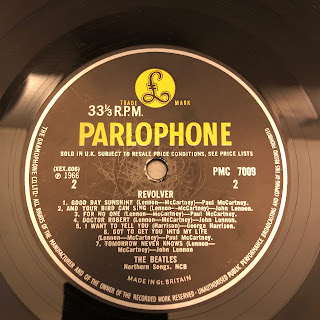
I bought this copy of Scott Walker's first solo LP in the same shop in the same year that I bought “Sgt Pepper”.

Scott Walker was just coming out of three years of being a scream idol with the Walker Brothers and he was determined that this time he was going to undersell himself. I fancy the picture on the back which has him looking soulfully towards the camera while a sophisticated lady gazed admiringly in his direction was originally planned to be on the front. I bet he didn’t want it, which is why they wound up with the picture they did, in which he seems to be doing everything in his power not to be a heart throb.

Of course, that was something he couldn’t help. This was a big hit album. The only records that stopped it going to number one were "Sgt Pepper" and "The Sound Of Music". He still got booked on the same TV shows as Tom Jones and Cilla Black. He even had his own prime time series.

This was one of those LPs you carried around under your arm, in the hope that some of its existential chic would rub off on your school blazer. Everybody has to have an image. It's often the case that the people trying hardest not to have one end up with the most powerful images of all. Scott Walker could have put a patent on "Beautiful Loser".

Musically I liked it then for the same reasons I like it now. He had a voice that seemed built for Rodgers and Hammerstein as much as Burt Bacharach. He had that thundering sound that was magically cooked up in Phillips studios between Wally Stott, a rock and roll rhythm section and scores of fiddle players who probably wore braces and armbands.

And there's nobody like him, before or since. Scott Walker's one of those artists, like Randy Newman, who arrived without antecedents. Now he seems to have departed without successors.

Saturday, March 09, 2019

Does Leaving Neverland mean we've adored our last pop star?

I watched the whole of the first part of Leaving Neverland. Then I watched the whole of the second part. Finally I watched Oprah Winfrey’s interview with Wade Robson and Jimmy Safechuck, the two men whose recollections of their time in Michael Jackson’s retinue of pretty young boys make up the film.

Before I watched it I wondered why it needed to be four hours long. Afterwards I thought the length amply justified. The film needs the time to take you through the experience of the boys as they and their parents were slowly lured into an unfamiliar world of unbelievable privilege and fathomless indulgence, as they were made to feel that they were among the Elect and their first duty was to protect the misunderstood demi-God who had put them there; as slowly, friendship turned to wooing and wooing turned to touching and then outright abuse in the many hiding places afforded by a sinister palace like Neverland. It’s a gradual process, which I gather is standard in these cases.

You’d have to be either a purblind fan or in some way financially dependent on the Jackson estate not to believe these two men. The film and the Oprah interview explain why they might have given contrary testimony in the past and also makes it clear they were not paid for their participation in the film. And even if they were no amount of money could possibly compensate them for the death threats they seem to be on the receiving end of today.

Was I shocked? After the supposedly clean-living River Phoenix was found dead on the pavement outside the Viper Room I stopped being shocked by the things that very famous people are capable of concealing from the public. And River Phoenix couldn’t buy anything like as much privacy and looking the other way as Michael Jackson could.

I didn’t feel betrayed either. Certainly not in the way many other, younger people have been. I couldn't be betrayed because I was never devoted.

I don’t believe you can ever be a fan of anybody who’s younger than you are. The only people you really look up to are the people who were already stars during your formative years. I was already an adult when the young Jackson started his career and so there’s always been a certain amount of detachment to my admiration of his gifts.

One of the things that comes through in the film is that Jackson had two gears. The first was "I love everybody in the world and I want them to love me" and the other could be perfectly expressed in the sentence he uttered to one of the parents, "I always get what I want".

I don't believe in the banning of music – or anything else for that matter. However I'm glad I don't have any shares in Jackson's catalogue because he and his music are about to disappear from the airwaves and streams, if not for ever then certainly for the next few years. Even the charity shops will be having to decide how they feel about selling all the copies of "Thriller" that are bound to be traded in.

Is it possible to separate the man and the music? Yes, it should be. Problem is the world which made Jackson a superstar operated on the principle "love me, love my music". His personality was baked in to ever last note. Every video Jackson made was an advertisement for himself. It was an invitation to join in his adoration. There was no modesty in his make-up, false or otherwise. In his case people are going to find it harder than ever to separate the music from the persona and the persona from the culprit.

My new book "A Fabulous Creation" is all about the age of the LP, which began with "Sgt Pepper" in 1967 and finished, for a variety of reasons, with "Thriller" in 1982. Jackson set out to make "Thriller" the biggest album in history and he succeeded. Everything he did was designed to make him the biggest. Being the biggest mattered to him in a way that it doesn't matter to most stars.

After watching Leaving Neverland we can only conclude that the biggest star in pop has also turned out to be its biggest creep. He believed what Goebbels believed – that if you're going to tell a lie, you may as well tell a big one. A lot of people believed it. Some still do. You have to wonder if they really do in their heart of hearts. As the producer of the film says to Oprah Winfrey, "all these people rushing to his defence – how could they possibly know what went on behind closed doors?"

Fandom's a kind of madness. All too easily it spills over from liking somebody's music and the way they do their hair into a blind belief that everything they do is beyond question. To some extent idols have always let us down. But in the past they've let us down gently. That's not the case here. After Leaving Neverland I find myself wondering. Have we adored our last pop star?
Tuesday, March 05, 2019

It's not the writing that counts - it's the crossing-out

One of the most striking revelations in Andrew Roberts book about Churchill is how much work he put into every single piece of communication he authored.

He had a prodigious memory, which meant he could call upon every poem, Bible reading or Shakespearean speech he had ever heard, and he was almost incapable of writing an inelegant sentence.

But that didn’t mean he would wing it.

Churchill would dictate his speeches, then correct them on the page and then dictate them again. The final version he read from would always be rendered in “psalm form” with the short lines indented so that he could read each one before saying it and then easily see where his eye should go next.


That’s how he became the greatest orator of the twentieth century - by starting off with a God-given talent and then working at it four times as hard as anybody else would.

I was thinking of him yesterday when I saw this letter which John Steinbeck wrote to Marilyn Monroe. It’s just a simple request for an autograph but it’s better written than most novels.


I bet he did it ten times before he got a version he was happy with. That’s the difference between the greats and everybody else. The infinite capacity for taking pains.


Friday, February 15, 2019

Another reason I reach for Steely Dan


When Will Birch tweeted this the other day I couldn't help but agree with his choice of Steely Dan. They’re the act I just naturally reach for and not just to test audio. They’re my default position in all kinds of situations.

I’ve just been looking at the covers of the first seven LPs. (After that it’s all CDs and compilations and you can’t really feel the same about CDs and compilations.) Because the covers of those records didn’t feature pictures of the band, all had cryptic titles and didn’t appear to share any particular aesthetic they seemed the perfect thing to reach for when you weren’t sure how you felt or what you felt like.

The act of “reaching for” something is qualitatively different from the act of clicking a couple of times and having it there. It’s an act that takes place in the physical world and therefore calls for commitment. In its own tiny way it echoes the difference between a teenager going up to someone and asking them out and merely friending them on Facebook. 

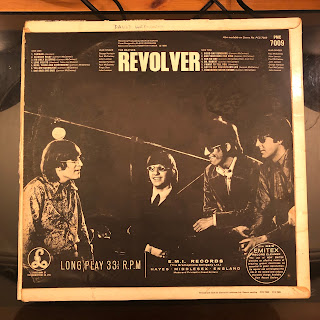
I’ve spent a lot of the last year thinking about LPs and their covers for my upcoming book A Fabulous Creation.


The cover was always more than the wrapper for the thing itself. Because it was twelve inches square and you couldn’t just slip it into your pocket it projected the music into the physical world. Therefore your decisions about what to play next were made as much visually as anything else. The problem with taking all those precious physical objects and reducing them to noughts and ones  is that once something is out of sight it has a tendency to be out of mind as well.

Thursday, January 31, 2019

Why I'm happy to wait for Robert Caro and Mark Lewisohn


I’ve read four volumes of Robert Caro’s epic biography of Lyndon Johnson. The fifth volume hasn’t been finished yet. In the course of an excellent piece in the New Yorker he explains that that fifth volume is “some years away”. (He's eighty-three.) If you read the piece, which is about how he has researched the book so far, you understand why.  Caro's driven by a compulsion to unearth the story that has not been told, even when he’s dealing with events that occurred many years in the past and have been extensively picked over.

When he started the book in the mid-70s many of Johnson’s contemporaries were still around. He spoke to them all but felt that many of them were just repeating the old stories that they had already trotted out for other writers. He thought there had to be more to it than that. He tells the story of how he managed to get after-hours access to the modest home in Texas where Johnson grew up in the 1920s and took one of Johnson’s brothers, who was at that stage elderly and in poor health, sat him at the table where the family used to eat, positioned himself behind him so that he was out of his eye line and then gradually nudged him into recalling where each member of the family would have been seated, what they would have said to each other and, crucially, what Johnson’s father used to say to his son over that dinner table that left him with such a burning desire to succeed where his own father had failed.

In the same week I read this, Mark Lewisohn, who is working on the other massive biography that I’m going to have to wait to read, told me that he’s currently listening to all 97 hours of the original tape which was running as the Beatles recorded what would be the “Let It Be” film and album. Furthermore he was making sure he did it on the day and at the time that they did it fifty years earlier. That’s a similar kind of dedication. Wonder if he'll come up with any insights the way that Caro did. I'm sure, in both cases, it will be worth the wait.

Wednesday, December 05, 2018

Doctorr Hook's part in the greatest spy story ever told


Blurbs on the covers of real-life stories of espionage that invoke the name of John Le Carré too often seem like a devalued currency. They’re like those reviews of new Stones albums that say “their best since ‘Exile On Main Street’. However I can assure you that The Spy and The Traitor, Ben Macintyre’s book about Oleg Gordievsky, fully warrants that kind of billing and that's for two reasons. 

The first is that Gordievsky is, as spies go, noble. He didn’t do it for money. He did it because he believed it would make the world a safer place. The second is that Macintyre is a brilliant storyteller who knows how to leave out the kind of detail that drags on the narrative and understands the importance of key details much as a spy would.

For instance, when Gordievsky was working for HM Government while based in Russia it was agreed that if he wanted to talk to his handlers he would stand outside a certain bakery at a certain time of the week carrying a Safeway bag. That meant staff from the embassy had to check in at this place scores of times, always wearing the same coloured clothes, holding the same carrier bags and having about their person a Kit-Kat and a Mars bar. Just in case. When Gordievsky was transferred to London his handlers kept on checking in at the same place in case the KGB had been watching and would connect the British spies’ non-appearance with Gordievsky’s absence from Moscow. Handling that one agent, whose identity was known only to a handful of officers, involved hundreds of people in years of harmless charades and a small minority in acts of breathtaking courage, particularly when it came to the moment of his "exfiltration".

The team set off from Moscow by car on the pretext of going to see a doctor in Finland. They take with them all the supplies they would need to stage a full picnic, English middle-class style, as well as syringes full of sedatives to quell the nerves of anyone called upon to spend a long time in the car's boot. Unbelievably the team also includes a husband and wife who, partly because they can't find a sitter and partly because her presence would serve to confuse their KGB shadows, take along their baby girl. Furthermore, this being the mid-80s, to pass time on the journey, they take cassettes including Dire Straits' "Brothers In Arms" and the Greatest Hits of Doctor Hook. Macintyre makes almost comic use of this last choice in the narrative. I'm sure if they make this into a movie the director will have a field day.


Saturday, November 10, 2018

Now that pop music's turning into history it's time for rock's version of the Sealed Knot

Chris Shaw does a podcast called I Am The Egg Pod in which he asks people to talk about a Beatles or Beatles-related record. I was too late for "A Hard Day's Night" because that had already been picked and so I chose "With The Beatles".

I dipped into some of the earlier interviews, which featured the likes of David Quantick and Samira Ahmed, and was frankly a little intimidated by how much people seemed to know about the records they were talking about. I wouldn't say I know a lot about "With The Beatles". However I do know a lot about how it felt to be thirteen-years-old and to get that record for Christmas in the days following the assassination of John Kennedy.

It's struck me while talking about my book "Nothing Is Real" that the Beatles were freshly placed before the public by the Anthology series in the mid-90s; because this happened to be around the time of Britpop, they seem to have emerged from that process for many people as the Godfathers of Blur. Because we can only appreciate things from the past when they appear to confirm our complacency about the present we find it easy to approve of the older, hairier, bitchier version of The Beatles sitting around at Abbey Road knocking out their white album, and we have difficulty relating to their earlier selves who sang thrilling pop songs for thirteen-year-old girls who screamed every time they shook their heads.

Chris asked me what people thought about the Beatles albums at the time they came out. I couldn't answer this properly because I think he was expecting me to describe the kind of considered responses people had in the early 90s to, say, the new U2 album. Was it a step forward or back? Was it a disappointment? In 1963, when we were in the thick of all the excitement, "With The Beatles" was just the big black thing that came between the small black things that were "She Loves You" and "I Want To Hold Your Hand". It was wonderful if you were one of the lucky ones who had it bought for you for Christmas. If you weren't it probably seemed even more wonderful. At the time I remember we just felt blessed.

I suppose it's inevitable that pop history, like the history of World War II, has to pass from direct experience to the history books and henceforth be experienced in perpetuity via Friday evenings on BBC Four. It already seems that pop music is, if anything, more appreciated in retrospect than it is at the time. Last year my son-in-law went to see the Stone Roses at Wembley Stadium. I was surprised they were playing anywhere that big. But they were. Almost thirty years after they were the hot new thing they appeared to be selling out bigger venues than ever, entertaining people who for one reason or another missed them at the time.

All this music may be appreciated more than it was at the time but it can never be felt in the same way. At the time it all happens it's too fast, too vulgar and too controversial to attract a mass audience. The mass audience comes later when everything's settled down and everything has been safely consigned to history and we can all approve of everything. Maybe that's the future of all pop music. Historical re-enactment. Maybe somebody will take a lead from America's Renaissance Fairs and make a fortune staging their own re-run of the NME Poll-Winners Concert of 1966 or the Glastonbury Festival of 1971, with actors playing the musicians, lots of places to charge your mobile and glamping facilities on site. A rock and roll version of the Sealed Knot. That's the way it all seems to be pointing.

Thursday, October 04, 2018

In praise of George Beardmore

I came to George Beardmore's "Civilians At War" after Kate Atkinson credited it as a source for her own "Transcription". It's one of the best books I've ever read about the experience of World War II.

Beardmore was an unsuccessful novelist living in North London with a young family when the war broke out. His asthma disqualified him from military service and so he did a variety of jobs. He was stationed with a rifle outside the engineering department of Broadcasting House in case somebody tried a coup de'état. Later he worked for the local authority, trying to find billets for nurses around where he lived in Harrow and then working with the teams who were sent in to pick up the pieces after air raids.

While they recovered the bodies, some of whom had to be retrieved from several gardens away from the point of impact, and tried to make safe the buildings, Beardmore dealt with the living. He kept a diary of the time. It's a unique account of the tedium and terror of life on the Home Front.

It's actually at its most terrifying in the days following D-Day when Hitler unleashed his so-called "terror weapons" on London and the South-East. After the war he became quite a successful writer and so he didn't do anything with his diary. In fact it wasn't discovered until more than thirty years later and then published by his daughters in 1984. It's well worth reading if you can find a copy. There's more about him here.

Monday, September 24, 2018

By looking at what happened in the Clinton years "Slow Burn" explains what's happening now


The Monica Lewinsky/Bill Clinton scandal was just over twenty years ago. Listening to Slow Burn, the podcast devoted to recounting it, I realise how many of the details I either never knew or have since forgotten.

The same could be said of the previous series of Slow Burn, which was about Watergate. What's most striking about the Clinton one, apart from his breathtaking recklessness, is that the Democrats were every bit as quick to close ranks around him as the Republicans are to get behind Trump today.

In both cases there's a lot of moralising in public while the decisions are made purely on the basis of legislative arithmetic. It's not a matter of what's right. It's a matter of what they get away with. It's a salutary illustration of the truth of Lyndon Johnson's dictum that the thing that matters most in politics is the ability to count.

Friday, September 21, 2018

If you're not nervous, you're not trying


Our guests at Word In Your Ear this week, Mark King and Mark Kermode, have the same initials and play the same instrument. You can hear both conversations here.

Kermode was talking about his adventures in a succession of semi-pro bands, which are recorded in his new book "How Does It Feel?". King was talking about his time at the top of the tree with Level 42 in the 1980s.

Both had interesting things to say about nerves and stage fright. Kermode realised after he was on the receiving end of a particularly savage audience reaction when trying to work as an alternative comedian that anything that didn't kill him made him stronger. King realised, when he was about to take part in a star-studded Prince's Trust show in the mid-80s, as he looked around and saw the ashen faces of Elton John and Eric Clapton, that nerves are something that never goes away.

My kids always say "it's all right for you - you've stood up in front of people lots of times". And I have. It doesn't mean I don't get nervous, just like the other three show-offs in the picture above.


Thursday, August 16, 2018

Everybody should read Craig Brown's book about Princess Margaret

Ma'am Darling, Craig Brown's book about Princess Margaret, is a simple idea, brilliantly done.

Everybody who ever met Princess Margaret remembered the experience, in the same way they might remember bee stings and other unpleasant experiences. Furthermore they all mentioned it in their memoirs. Therefore you can put together an interesting biography from all these encounters.

For instance?

Cherie Blair, trapped with PM at some do, reaches for Chris Smith, Culture Secretary and first openly gay government minister. "Have you met the Culture Secretary, Ma'am? And this is his partner."

PM: "Partner for what?"

CB: "Sex, I suppose, Ma'am."

You'd be hard-pressed to find a book more choc-ful of awkward silences, deliberate misunderstandings and "get your coat" moments than this one.

I also like the fact that it's a reminder of how there's nobody more star-struck than the stars.

Alan Bennett goes to visit Russell Harty on his death bed. The nurse has to laboriously remove all the tubes and breathing apparatus that are keeping him alive so he can tell his friend something. When she does Russell gathers all his strength and says "Ned Sherrin had lunch with Princess Margaret the other day and she asked about me. Twice."


Monday, July 16, 2018

Honestly, where would I be without Wikipedia?

I can't say I'd taken much notice of Alvin Stardust before yesterday, when I read that his son, the Headmaster of Reigate Grammar School, was the new chair of the Headmasters' Conference. When I did take notice I was glad his Wikipedia page was there to provide the level of detail that even the nosiest newspapers don't get involved in. Here's what I learned and what I already knew.

Real name: Bernard Jewry. Knew that. Born in Muswell Hill. Didn't know that. Mother a theatrical landlady which meant he was on stage as an infant. Didn't know that. First tasted fame in the sixties as pop singer Shane Fenton. Knew that. He took on that name and persona when the original Fenton died. Now I didn't know that. By then he had married Iris Caldwell, the sister of Rory Storm and former girlfriend of both Paul McCartney and George Harrison. I knew about Rory Storm but not the rest. They had a child who they (bizarrely, to my mind) christened Shaun Fenton. He's the guy who's now the senior head master. There is another son who was called Adam Fenton who grew up to produce dance records under the name Adam F. Knew that. In the early seventies Jewry became Alvin Stardust. Obviously knew that. Stardust was the invention of one Peter Shelley. Knew that. Shelley appeared as Stardust promoting his first hit and then handed off the job to Jewry (didn't know that), who became Stardust for the rest of what Wikipedia calls "a chart span lasting twenty-five years". In 1981 he married the actress Liza Goddard (knew) under his original name Bernard Jewry (didn't know). He was married to his third wife when he died in 2014.

There's nothing there that's particularly outlandish, nothing that would excite a headline writer, nothing that would justify me devoting the time to read a book about him, but I found it all fascinating and I was glad Wikipedia was there to provide those facts in its flat, dispassionate style.

Thursday, June 07, 2018

In praise of Schitt's Creek and Daniel Levy's millennial face

I've only just discovered Schitt's Creek, the Canadian comedy devised by Eugene Levy and his son Daniel and I love it.

The Schitts, a super-rich family, lose everything overnight and are forced to take refuge in Schitt's Creek, an unremarkable town in Trump country which they had bought in their previous life for a laugh. They live in the local motel and take whatever work they can find.

Dad sets up his office in a local garage, son David tries to apply his background in high-end fashion to the town's only ladies outlet, the Blouse Barn, daughter Alexis, whose usual boyfriends are Middle Eastern potentates or movie stars, sets her sights on the local vet and Catherine O'Hara as the mother Moira, a superannuated soap star, teeters round the town in vertiginous heels and a series of black and white outfits that must have been modelled on some of the more extreme items from the wardrobe of Diane Keaton.

The most striking characterisation is Daniel Levy's portrayal of David (above) as a sly, sexually flexible young man who has absorbed many of his mother's preposterous airs while also retaining some of his father's enterprising spirit. When the plot presents him with a dilemma, which is just about every week, you see a succession of expressions flit across his face from condescension through suspicion to an amused sense of possibility. I call it Millennial Face.

Thursday, May 31, 2018

What was Gareth Bale thinking of?

Obviously top athletes have bodies that don't work the way ours do. But what interests me is how their brains must be wired differently too. The Gareth Bale goal against Liverpool on Saturday has had me puzzling ever since. He'd just come on the pitch and as far as I could see had only touched the ball once, to ship it from the middle out to the left, before jogging to the edge of the box, more in hope than expectation. When Marcelo's ball came in it looked as though the deflection it had taken off the defender's boot meant  it was going to land too far behind him for him to be able to do anything with it. So, a microsecond after it had begun spinning, he launched himself in the air with his back to goal thinking....what?

I know exactly how I can connect with this and put it in the top corner?

I may as well do something?

It's worth a go?

Nothing at all. He was just doing what his body told him to.

We've no way of knowing. The only thing we do know is that, unlike the rest of us, he couldn't have been thinking of the consequences of what would have happened if it had turned out the way most bicycle kicks turn out – with the ball in row Z and Ronaldo looking at him with disgust as they all trooped back to the halfway line.

It's here for those who have been living in a cave.